
Employee Retention Statistics That Matter: What the Data Tells Us (and what to do about it)
Last updated
8 min read
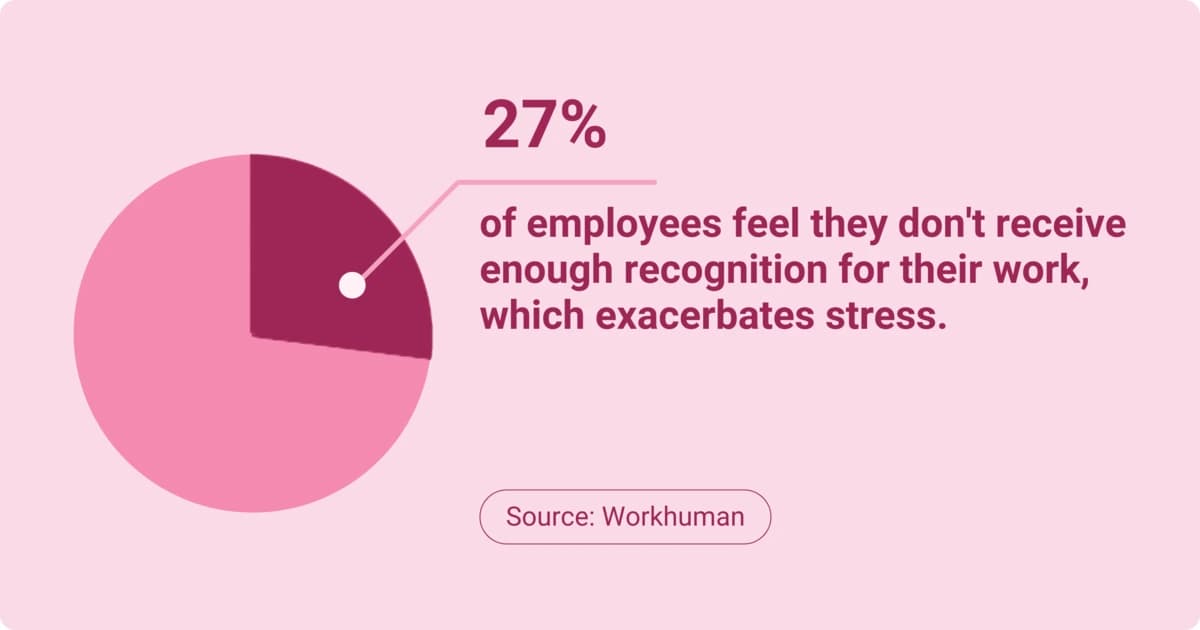
Table of contents
- The retention crisis in numbers: where companies are losing talent
- Who’s leaving and why: retention by segment
- Why employees leave: top drivers of turnover
- What works: evidence-based employee retention strategies
- The business case: what retention (or lack of it) costs
- From insight to action: making data work for you
- FAQs
- Final thoughts: the employee retention crisis is serious but solvable
Share this article
The foundation of any great organization is a well-trained, experienced, and thriving workforce. This is as true as ever in 2025 – yet an increasing number of companies are still failing to retain employees. Recent Gallup data on employee retention and attraction Opens in a new tab shows that 1 in 2 U.S. employees are open to leaving their organizations.
Understanding the problem is the first step toward solving it. Rather than wasting money on misinformed, albeit well-intentioned, incentives to keep employees, companies must address the root causes behind those high turnover rates.
The retention crisis in numbers: where companies are losing talent
Before we get into the “why” of the retention crisis, we need to understand its scope. Employee turnover is a serious problem – it’s expensive and widespread. Businesses of all sizes and industries are feeling the sting of the “Great Resignation” that kicked off during the COVID-19 pandemic.
Let’s take a look at the numbers that spell this problem out.
General retention and turnover statistics
According to Workhuman data:
- 38% of U.S. employees plan to look for a new job within the next year
- 49% of the workforce is actively searching or open to new work opportunities
- The cost of turnover in 2021 was $2.37 trillion in the U.S. alone
- Replacing an employee costs up to 200% of their annual salary
Who’s leaving and why: retention by segment
The employee retention crisis impacts all companies, but not equally. Industry, company size, work environment, and worker demographics can all make a difference. Let’s zoom in on where employees are leaving fastest and why.
Industry-specific turnover rates
Some industries experience higher turnover rates than others. However, that doesn’t mean other industries are immune. The average cost of employee turnover is still higher than pre-pandemic rates, putting all kinds of companies at risk. Here are some industry-specific stats:
- Retail is one of the hardest-hit sectors, with an average turnover rate of about 13% (source: HubstaffOpens in a new tab).
- Within the retail industry, restaurants (17.2%) and hospitality (17%) face the highest turnover rates (source: HubstaffOpens in a new tab).
- Turnover rates in the professional and business services sector have increased by 0.5% per month since 2024 (source: Bureau of Labor StatisticsOpens in a new tab).
- Turnover rates in healthcare and social assistance have lowered slightly but are still higher than average at 5.9% per month (source: Bureau of Labor StatisticsOpens in a new tab).
Retention by company size
Are larger or smaller businesses more impacted by the retention crisis? That’s complicated. While larger companies experience higher turnover rates, small businesses are more impacted by the cost of each resignation.
- Replacing a worker with a $75,000 salary could cost up to $300,000, a significant cost for a smaller company (source: ForbesOpens in a new tab)
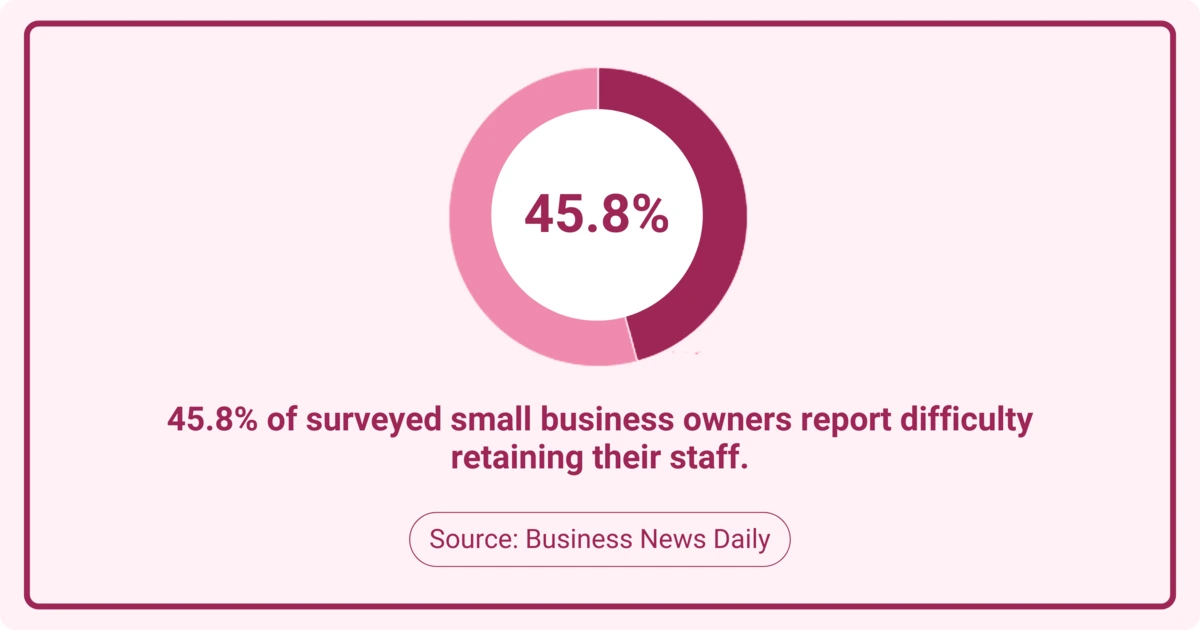
- 45.8% of surveyed small business owners report difficulty retaining their staff (source: Business News DailyOpens in a new tab).
Retention by demographic
It’s important to look at the big picture of employee retention, but we can’t ignore the individual level. Data shows that age and gender impact employee turnover, with older men being the most likely demographic to stay with an employer for a long time.
Work environment: remote vs. hybrid vs. on-site
It’s not just about who’s working, but also how they work. Several studies on the relationship between work environment and employee retention show that flexible work arrangements, such as hybrid and remote options, may encourage employees to stay.
- 91% of workers worldwide prefer remote or hybrid work (source: StatistaOpens in a new tab).
- A 2023 survey showed that voluntary turnover increased by 26% for on-site workers vs. 13% for fully remote workers (source: Plan SponsorOpens in a new tab).
- 71% of employers with mandatory return-to-office policies find it difficult to retain workers (source: Plan SponsorOpens in a new tab).
- 96% of surveyed workers said a remote or hybrid work model would improve their mental health (source: FlexJobsOpens in a new tab)
Why employees leave: top drivers of turnover
Statistics alone can't paint the whole picture. For example, men are more likely to stay at a job than women, but why? Socioeconomic factors play a role, as do working conditions. Understanding the drivers of turnover can help you create solutions at your company.
Here are a few key statistics you need to know.
Lack of career growth
Workers are more likely to stick with a company if they feel they have a future there. Here’s what that looks like in numbers:
- 11% of employees say that more opportunities for career advancement would keep them at a company (source: GallupOpens in a new tab).
- 37% of employees are worried about job security in their current role (source: Nectar HROpens in a new tab).
- 37% of employees report that a lack of career progress would encourage them to look for a new job (source: DeloitteOpens in a new tab).
Burnout and workload
The International Classification of Diseases lists burnout as an occupational phenomenon. Chronic stress in the workplace can lead to serious mental health problems, not to mention a lack of productivity. Workers experiencing burnout are likely to look for another job to keep themselves healthy.
- 27% of employees feel they don't receive enough recognition for their work, exacerbating stress (source: Workhuman).
- 37% of surveyed workers report feeling so overwhelmed that it’s hard for them to do their job (source: National Alliance on Mental IllnessOpens in a new tab).
- 34% of employees aged 18-29 and 28% of employees aged 30-49 would consider quitting a job because of its impact on their mental health (source: National Alliance on Mental IllnessOpens in a new tab).
- Workers who report experiencing burnout are three times more likely to report that they are looking for another job (source: Society for Human Resource ManagementOpens in a new tab).
- Burnout can cost organizations up to 20% of their total payroll costs (source: GallupOpens in a new tab).
Management and leadership quality
Great leadership lays the foundation for a thriving workplace. The numbers show how management quality has a direct effect on employee turnover rates:
Compensation and job security
Let’s talk about the obvious: Workers who are paid more are more likely to stay. Compensation is not the only factor that causes high employee turnover, but it is a significant contributor and one you can’t ignore. This is especially true in times of high inflation and looming recession.
- 30% of employees say that additional compensation and benefits could prevent them from leaving their job (source: GallupOpens in a new tab).
- 55% of employees report leaving their jobs for higher compensation (source: LatticeOpens in a new tab).
- 14% of businesses say employees left them after seeing job postings with higher pay (source: CNBCOpens in a new tab)
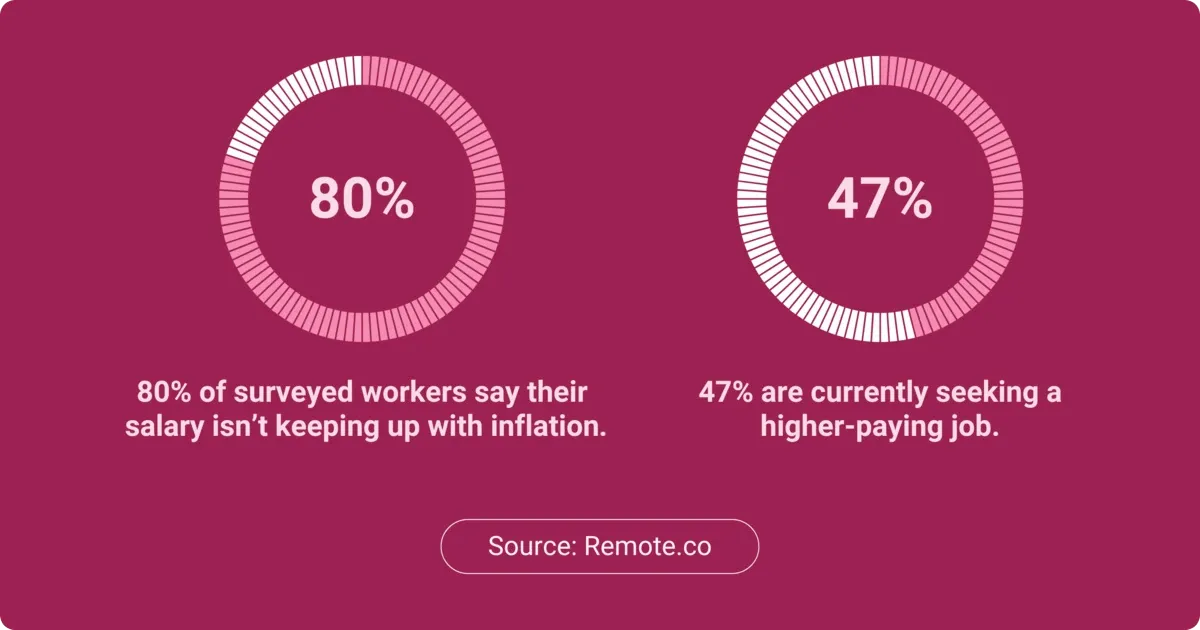
- 80% of surveyed workers say their salary isn’t keeping up with inflation, with 47% currently seeking a higher-paying job (source: Remote.coOpens in a new tab)
Work-life balance
Work-life balance is hard to define. It encompasses everything from flexible work schedules to paid family leave and other benefits. Because work-life balance means something slightly different for each business and employee, we can’t directly measure its impact, but we can look at statistics that show how workers value jobs that support their personal lives. For example:
- 48% of surveyed workers would quit their job if it prevented them from enjoying their lives (source: World Economic ForumOpens in a new tab).
- 63% of surveyed workers reported needing more flexibility (source: Harvard Business ReviewOpens in a new tab).
- Flexible schedules and family leave particularly benefit women and workers of color (source: Harvard Business ReviewOpens in a new tab).
- Employees who rate their work-life balance highly are 10% more likely to stay with that company (source: WebMDOpens in a new tab).
What works: evidence-based employee retention strategies
The employee retention data described here doesn’t lie: Retention (or the lack thereof) is a big problem for businesses of all sizes and industries. So, what can you do about it?
Fortunately, the data also presents solutions. There is no one-size-fits-all fix, but you can use these statistics to create evidence-based strategies for employee retention. Let’s dig into the data on what works and why.
Recognition and appreciation
Employee recognition matters more than you might think. A Workhuman report on reducing voluntary turnover with social recognition found that:
- Employees recognized 7-10 times annually are 2 times less likely to leave their jobs.
- Recognized new hires leave three times less than unrecognized new hires.
- Organizations that have effective recognition programs experience a drop in turnover from 18% to 11%.
Here are a few more statistics on employee recognition:
- Consistent recognition can add up to 3.5 years to an employee’s tenure (source: O.C. TannerOpens in a new tab).
- Employees who are regularly recognized are 45% less likely to have switched jobs two years later (source: GallupOpens in a new tab).
- Employees who receive proper recognition are up to nine times more likely to be engaged at work (source: GallupOpens in a new tab).
Mentorship and career development
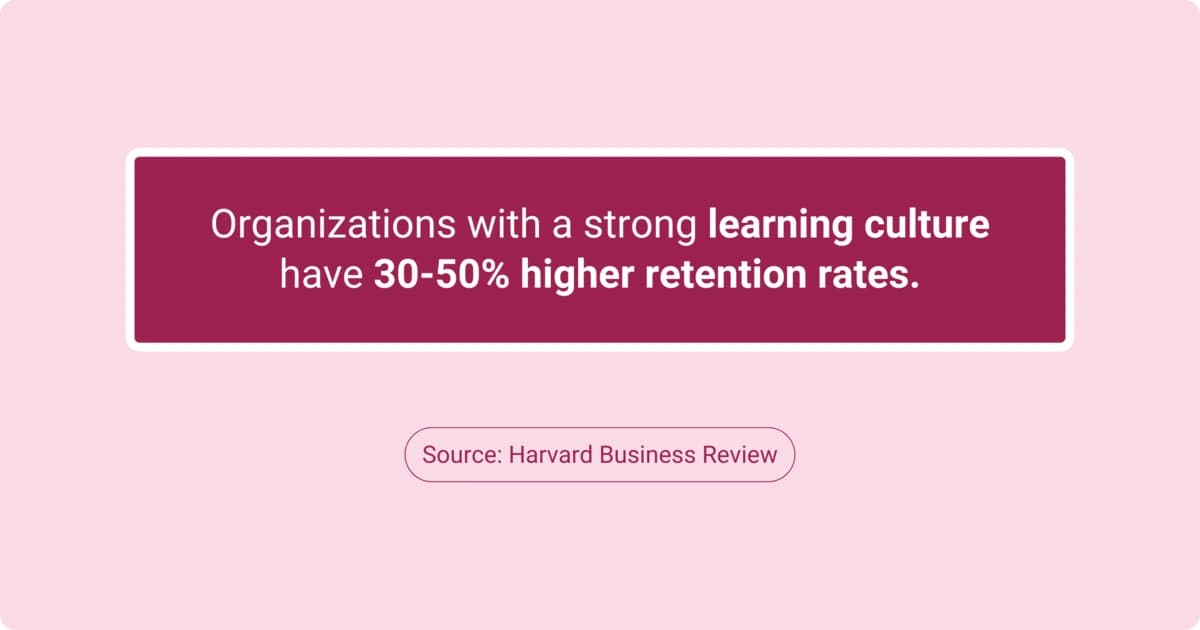
A lack of career advancement is one of the main reasons employees leave – that means increased opportunities for advancement can encourage them to stay.
Onboarding experience
This might not seem as obvious as other factors, but your onboarding process can have a significant impact on employee retention. That’s because good onboarding starts employees on the right foot. It sets them up for long-term success and boosts employee satisfaction.
- Up to 20% of staff turnover occurs within 45 days of hiring, making those early days crucial (source: Harvard Business ReviewOpens in a new tab).
- 93% of businesses agree that onboarding helps employees decide whether to stay or leave (source: Oak EngageOpens in a new tab)
- A good onboarding process can result in 18 times more dedication to the employer (source: Devlin PeckOpens in a new tab).
- 69% of employees who have an exceptional onboarding experience are likely to stay with the company for at least three years (source:Devlin PeckOpens in a new tab).
Benefits and perks
As discussed above, compensation and benefits play a major role in employee retention. You may not be able to raise every employee’s salary immediately, but offering more benefits and even minor perks can help.
- 78% of employees report that they’re more likely to stay with a company because of their benefits program (source: United InsuranceOpens in a new tab).
- 40% of workers say that they would be more loyal to their company if their benefits were customized to meet their individual needs (source: United InsuranceOpens in a new tab).
- 92% of surveyed employees value health insurance benefits when comparing employers (source: PeopleKeepOpens in a new tab).
- 40% of employees are looking for family-related perks, such as childcare stipends and pet insurance (source: PeopleKeepOpens in a new tab).
Employee engagement
Finally, strategies that help your team stay engaged at work can boost employee retention. Engagement is defined as an employee’s level of commitment and personal connection to their work. In other words, a sense that this is “more than just a job.” Here’s what the data shows:
- Organizations with highly engaged employees report 43% less turnover (source: Workhuman)
- Employee engagement can reduce turnover by 18% in organizations with a high turnover rate (source: GallupOpens in a new tab).
- Only 31% of employees in the U.S. can be described as engaged (source: GallupOpens in a new tab)
The business case: what retention (or lack of it) costs
If you think creating custom strategies to improve employee retention isn’t worth the cost, think again. High turnover rates are far more expensive than effective measures to reduce them.
Let’s take a look at the cost comparison.
Cost of turnover
The costs of hiring and training new employees add up. Here’s what that looks like in numbers:
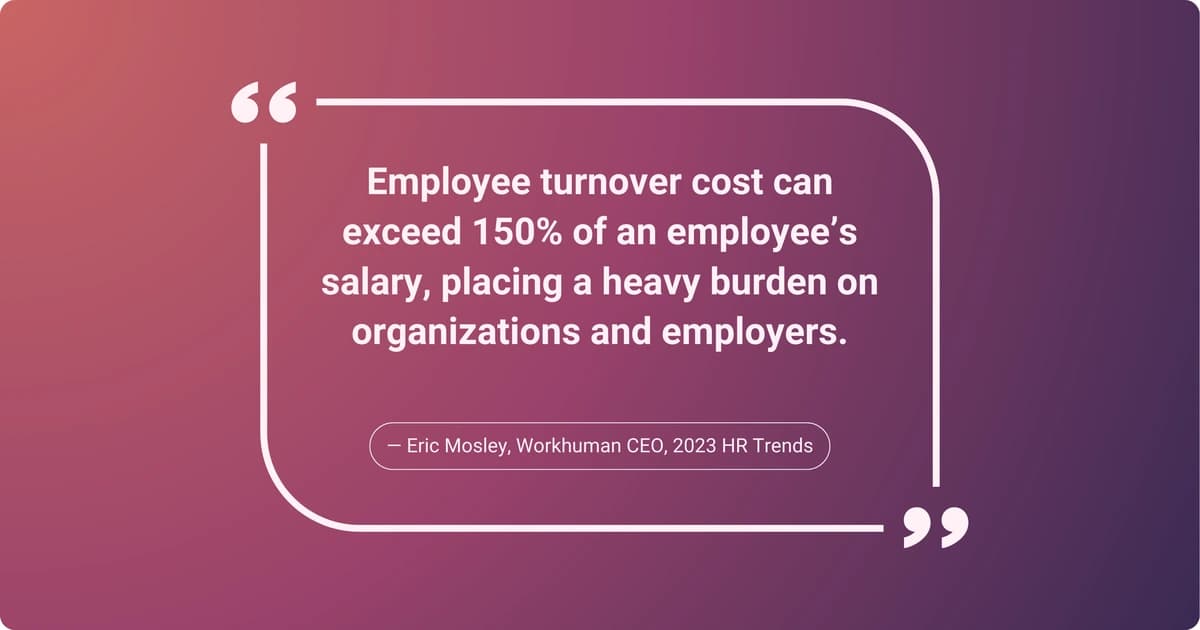
- Replacing an hourly worker can cost around $1,500, but replacing a technical, salaried employee may cost up to 150% of their salary (source: Built InOpens in a new tab).
- The average cost to hire ranges from $4,400–$15,000 (source: Workhuman)
- Organizations with high turnover rates also face the indirect costs of decreased employee morale and increased workload (source: Workhuman)
ROI of retention investments
On the flip side, employee mentorship, engagement, and benefit programs are far less expensive. Workhuman data shows that retention boosts profits in the long term by increasing employee productivity and innovation.
From insight to action: making data work for you
Remember, employee retention statistics can help you understand the crisis, but that's only the first step in solving it. What matters most is using that data to create actionable strategies.
Every organization is different, and there is no perfect solution for everyone. Here are a few tips that will help you address turnover rates within your business.
Benchmarking retention rates
Overwhelmed by the numbers? Now that you’ve looked at employee retention statistics take some time to apply them to your business. Calculate your turnover rates and compare them to national, state, and industry averages. This will help you understand where your business stands.
Spotting at-risk talent
Another way to improve retention is to identify at-risk workers before they leave. Analyzing your hiring and turnover statistics will help you understand which workers are most likely to quit, such as young employees, hourly employees, or working parents.
Exit interviews offer insight into why these employees decide to leave. Find out what past employees struggled with and how you can fix those problems in the future.
Prioritizing retention levers
Retention “levers” are the tools you’ll use to boost retention, such as customizing benefits or overcoming burnout. Decide which evidence-based strategies are most important for your business and prioritize investing in those changes. To avoid overinvesting in the wrong levers, start with small yet significant changes and track your results.
FAQs
What is a good employee retention rate?
Most companies aim for a retention rate of at least 90%. Around 10% turnover allows for new talent to flow into the company without the business overspending on hiring.
What is the biggest reason employees quit?
Employees quit for many reasons, but the most significant are low compensation, a lack of engagement, low-quality leadership, and poor work-life balance.
How do recognition programs reduce turnover?
Employee recognition programs help workers feel valued and engaged at work. This boosts company loyalty and can reduce burnout, encouraging employees to stay.
What industries have the worst retention?
Retail industries — specifically hospitality and food service — have the highest turnover rates, alongside professional services.
What is the average cost of losing an employee?
Losing an employee can cost a business between 50%-200% of that employee’s annual salary.
Does salary impact employee retention?
Yes. However, it isn’t the only factor, and businesses that can’t afford to raise all salaries can also boost retention with less costly perks, employee engagement programs, mentorship, and more.
What’s the best way to measure retention?
Here’s an easy formula to measure retention:
(# employees at the end of a set period/# employees at the start of a set period) x 100 = retention rate percentage.
Final thoughts: the employee retention crisis is serious but solvable
Most modern businesses are worried about retention rates, and for good reason – high turnover is expensive, inconvenient, and can hinder growth goals. Fortunately, it’s also solvable.
There isn’t one simple solution to the employee retention crisis. Instead of opting for a quick fix, dig into the data. A thorough understanding of employee retention statistics will help you face the problem head-on and develop custom, data-backed strategies that seriously reduce turnover.

Workhuman Editorial Team
More by Workhuman Editorial TeamRecommended for you