
How to Improve Employee Satisfaction: 11 Proven Strategies
Last updated
7 min read

Table of contents
- Understanding employee job satisfaction
- 11 ways to improve employee satisfaction
- Bringing it all together
Share this article
Many businesses work tirelessly to make their customers and clients happy. While that's a worthwhile endeavor, knowing how to improve employee satisfaction is equally important to your organization's success. That's because satisfied employees are typically more committed to their jobs, loyal to their employers, and willing to go the extra mile.
Job satisfaction reached an all-time high in 2023, with 62.3% of workers in a survey by 2024 Gallup report "US Job Satisfaction Opens in a new tab" reporting that they were satisfied with their roles, up from around 60% in the previous year's survey. While the steady increase in employee satisfaction is a good sign, there's still a lot of room to grow.
If you're looking for employee satisfaction ideas for your organization, these strategies are an excellent place to start.
Understanding employee job satisfaction
Employee satisfaction is a complex matter that's often difficult to tackle. Before you try to improve the employee experience, you first need to understand what satisfaction means in the workplace and the role it plays in your organization.
What is employee satisfaction?
Employee satisfaction is the level of fulfillment and contentment that people feel within their jobs. It encompasses workers' perception of their individual roles as well as the organization as a whole. A wide range of factors, from work-life balance to leadership to company values, can affect employee satisfaction.
Another separate but similar metric that businesses often consider is employee engagement. Whereas employee satisfaction refers to how happy employees are in their jobs, employee engagement describes their level of interest in their work. Engaged employees are self-motivated, want to prove their worth, and aim to contribute to the company's success.
Why is employee satisfaction important?
Promoting employee satisfaction benefits your employees as individuals, but its advantages extend beyond their personal happiness. Satisfaction levels have a ripple effect throughout the rest of your organization.
More specifically, employee satisfaction has a direct and substantial impact on employee retention. A 2024 Gallup report on "Employee Retention & AttractionOpens in a new tab" revealed that two categories – engagement and culture and wellbeing and work-life balance – accounted for 69% of the total reasons employees left their jobs in 2023.
Ignoring these core elements of employee satisfaction can thus damage your retention rates and cause financial losses due to high turnover.
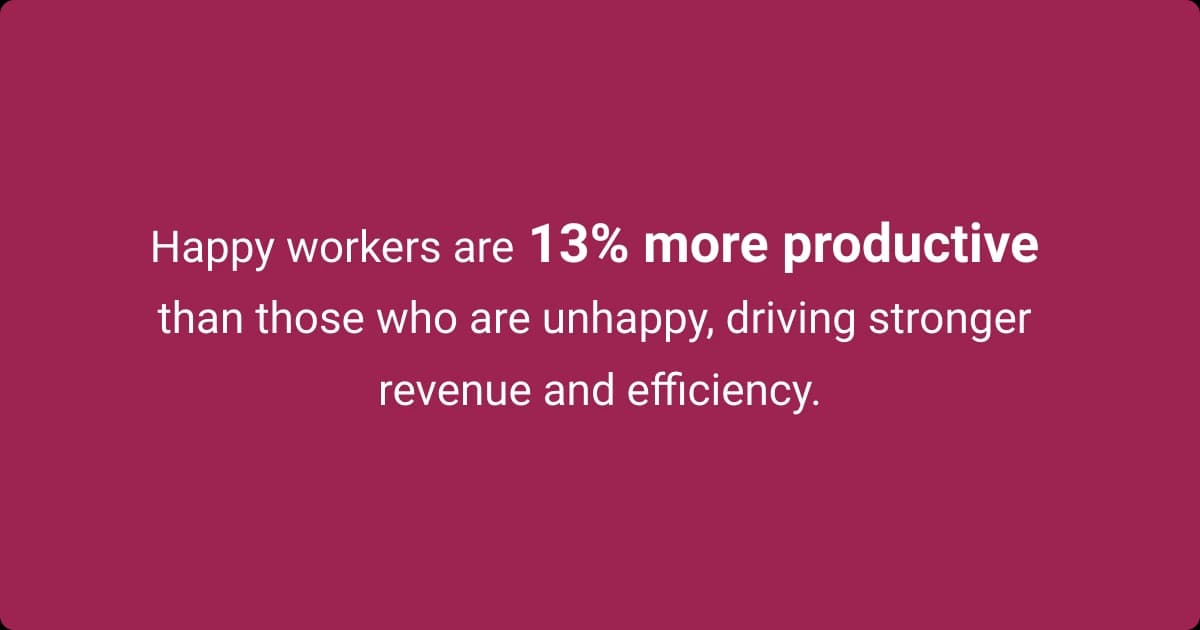
In addition to remaining with your company for the long term, satisfied employees are also more productive, engaged, and invested in the organization's accomplishments. One study from the Social Science Research Network Opens in a new tab found that happy workers are 13% more productive than those who are unhappy, driving stronger revenue and efficiency.
11 ways to improve employee satisfaction
Many businesses recognize its importance but struggle to find practical ways to boost employee satisfaction. For more satisfied employees, check out these job satisfaction strategies you can implement within your organization.
1. Create a positive work environment
Building a positive environment within your workplace is one of the most crucial employee satisfaction tips, but it requires careful consideration of your organization and the people who work for you. The key to a happier workplace is aligning the employees and culture to a shared purpose that motivates everyone to perform their best.
In some cases, that means hosting company events and celebrations focused on your mission, values, and goals. In others, it involves providing enjoyable spaces within your physical work environments, such as lounges and gyms.
However, a positive work environment is about more than perks and amenities. It's a place where employees and leadership have a shared sense of trust. It also involves encouraging collaboration among employees so that they feel connected to one another and the organization.
2. Promote work-life balance
Work-life balance is an essential ingredient to happier employees and a strong company culture. Overloading your team and constantly contacting them outside of work hours will quickly erode their job satisfaction and diminish their trust.
Instead, offer flexible work options whenever possible. Remote work and flexible hours can significantly enhance employee satisfaction because it allows workers to spend time with family and pursue passions outside of work. It also helps them manage both their work and personal responsibilities, such as childcare and medical appointments.
Organizations should also emphasize the importance of taking sick leave, breaks, and vacations to recover and recharge. While it may seem like giving employees time away from the workplace would negatively impact revenue and sales, the opposite is generally true.
3. Incorporate 360-degree feedback
Another central feature of employee satisfaction programs is creating feedback loops between employees and management. Regular, open, and honest feedback helps employees identify areas for improvement and understand their strengths while also improving their engagement levels.
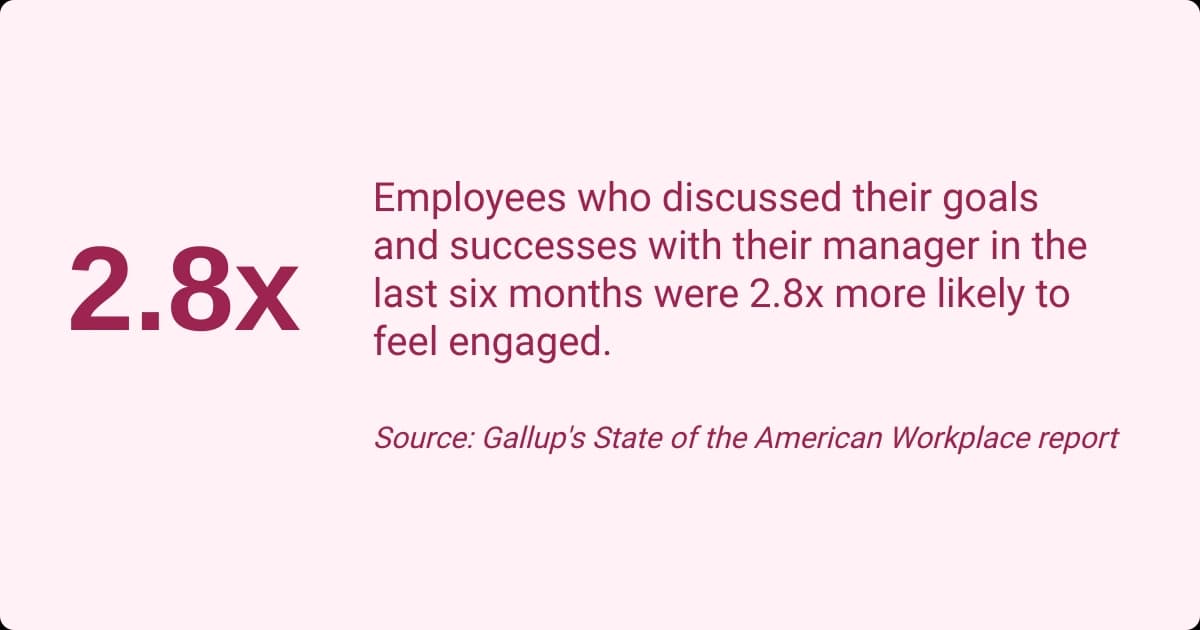
According to Gallup's State of the American WorkplaceOpens in a new tab report, employees who discussed their goals and successes with their manager in the last six months were 2.8 times more likely to feel engaged.
Keep in mind that continuous feedback should go both ways. Just as you should give your employees feedback in a healthy way, they should have equal opportunities to offer feedback about the work environment and potential changes that you could make. Their unique insights into the internal dynamics at your organization help you pinpoint issues that might be negatively influencing other employees' satisfaction levels.
Workhuman's Conversations tool is an effective way to establish this regular communication. It enables employees and managers to request and receive feedback at any time.
4. Support career development
Providing training and opportunities for career advancement helps employees grow and develop professionally. A report by Gartner on "Employees Satisfaction with Their Career DevelopmentOpens in a new tab" shows that when employers support employees in growing their careers, those employees are 39% more likely to become high performers and 19% more likely to stay with the organization.
Create a career development program with training opportunities that align with your employee's career goals. This not only enhances their skills but also shows you're invested in your employees' futures. Without an effective development program, they might have no choice but to seek opportunities for learning and advancement elsewhere.
Mentorship programs are another great way to help employees reach their full potential. Pair mentors who can provide advice and support to employees needing guidance, particularly in their early days with the company. On the opposite side, tasking employees with mentorship responsibilities demonstrates your confidence in their knowledge and abilities. Both aspects of this relationship foster a sense of belonging and growth.
5. Empower employees to make decisions and take ownership
To feel satisfied with their work, employees need to know they have a voice in the workplace. More than that, they need to feel that their voice is recognized and valued.
Here are a few of the ways you can accomplish this:
- Delegating tasks: Assign employees important tasks that focus on their strengths and skill sets. This shows you have faith in their abilities and allows them to make more substantial contributions to the company.
- Delegating roles: In addition to assigning tasks, look for opportunities to delegate roles of authority. For example, appointing team leaders gives employees a vested interest in the success of their projects.
- Encouraging autonomy: Trust your employees to meet your standards and avoid micro-managing their work. Keep track of their performance and growth by helping them create goals and develop plans to meet them, maintaining both their satisfaction and their motivation.
- Giving creative freedom: Specific instructions are sometimes necessary, but when it's possible, give employees creative freedom to approach problems in their own ways. They'll see that you trust their instincts and have a chance to develop and enhance their problem-solving skills.
6. Offer competitive compensation
When businesses consider how to increase employee satisfaction, they often default to upping their pay, and for good reason. Providing competitive compensation packages, including salaries, bonuses, and benefits, ensures employees feel you're aware of their skills and contributions. This naturally leads to higher job satisfaction.
A study about "How Americans View Their JobsOpens in a new tab," by the Pew Research Center found that around 51% of employees express job satisfaction. However, their level of contentment depends largely on the pay and benefits they receive. Employees with higher incomes are more likely than those with lower earnings to say they're extremely or very satisfied with their jobs.
7. Recognize and reward employees
Alongside an employee's salary, empowering employees by offering rewards and recognition underscores your appreciation for their hard work. These benefits show that you see and value their role in your organization.
Your rewards and recognition can take a variety of forms, including:
- Personalized rewards based on performance reviews
- Peer recognition
- Bonus programs
- Private and public acknowledgments, both verbal and written
No matter what method you use to offer praise, make it specific to individual and group achievements. Generic recognition is less likely to increase employee satisfaction because it doesn't speak to that person's unique contributions to your company.
The frequency of recognition is also crucial. While employees might welcome an annual thank-you dinner, more regular signs of appreciation will boost job satisfaction. In "The Importance of Employee Recognition: Low Cost, High ImpactOpens in a new tab" survey by Gallup, only one in three workers strongly agreed that they had received recognition or praise in the past week.
Aim to avoid this trend by making recognition a regular rather than occasional practice.
Workhuman's Social Recognition® tool simplifies the recognition and reward process so you can offer it more consistently. Employees can recognize and reward one another for a job well done, and leaders can submit Team Awards for groups that accomplish their goals.

8. Create a culture of transparency
When your workplace culture is transparent and based on open communication, employees and leadership develop a foundation of trust. Transparency also makes the workplace more unified as everyone feels included in and important to the organization's mission.
To establish transparency, implement clear processes, procedures, and training. When you make major decisions that affect the company at large, walk through your reasoning rather than handing information down without explanation.
Finally, give employees easy access to resources so they feel fully involved in and knowledgeable about the company's approach. This might mean creating additional avenues for communication, such as suggestion boxes, town halls, meetings, and digital platforms for feedback.
9. Show employees that you care about wellness
Integrating wellbeing into the workplace increases employee satisfaction because healthy people are generally happier people. Unfortunately, a "2023 Alight International Workforce and Wellbeing Mindset Study"Opens in a new tab survey from
Enacting health initiatives and promoting healthy socializing supports employees' general wellbeing. It also shows that their wellness is a priority for your organization and that you see them as more than just a number.
10. Foster workplace relationships
You can't force people to become friends, but you can create an atmosphere that encourages them to build bonds. This starts with leading by example and treating employees the way you want them to treat each other. Show respect, kindness, genuine interest, and a willingness to hear their ideas.
These conversations often aren't possible in formal meetings, so leaders should have casual chats with employees on a regular basis. In addition, share resources and events that might interest them through team chats, emails, or newsletters.
Another easy way to nurture workplace relationships is by giving them the space and time they need. For example, you might offer slightly longer lunch breaks so employees can spend time together during the work day. Or you might give teams time for open discussions and brainstorming without a set agenda. These steps allow relationships to form naturally without your direct intervention.
11. Utilize surveys and questionnaires
Deciding how to increase job satisfaction would be much simpler if you knew what your employees were thinking. You wouldn't have to guess or make assumptions about their concerns and feelings and could tailor your improvements to their specific wants and needs.
You might not be able to read minds, but administering workplace satisfaction surveys gives you a window into your employees' thoughts about the workplace. Your surveys can cover points such as:
- Recognition
- Relationships with leadership
- Workplace culture
- Training opportunities
- Career advancement
Administering regular surveys that measure employee satisfaction in these and other areas lets you know what employees want. With that knowledge, you can more successfully meet their expectations and resolve issues before they snowball into bigger problems.
Bringing it all together
Every organization has to develop its own approach when determining how to improve employee satisfaction. What works for one group of employees might not work for another. However, the advantages of improving satisfaction rates – including higher retention, productivity, and engagement – are universal.
In the end, putting your employees first serves your employees, your company, and its goals. On the other hand, making employee satisfaction an afterthought puts you at risk of excessive and expensive turnover. Put thought and care into your employee satisfaction efforts, and your organization will enjoy the benefits long into the future.

Workhuman Editorial Team
More by Workhuman Editorial TeamRecommended for you