10 Innovative Recruitment Strategies for Your Organization
Last updated
9 min read

Recruiting top talent is a perennial challenge for every organization. Staying on top of the game is essential to adopting innovative recruitment strategies to attract the most qualified candidates.
Recruitment strategies range from leveraging social media platforms and implementing referral programs to using data analytics and application tracking systems.
Keep reading to learn the most effective strategies to revolutionize your organization’s recruitment process.
What is a recruitment strategy?
Good recruitment strategies combine marketing efforts and branding to reach potential talents. One example is using social media platforms like Facebook or Instagram to maximize job posting reach.
HR managers or professionals usually plan and implement recruitment strategies within the company. However, some organizations make use of third-party consultants or recruitment agencies.
Why is utilizing a recruitment strategy important?
The goal of recruitment goes beyond filling a position -- it’s also about hiring the right people, reducing employee turnover, and preventing cost-per-hire losses to preserve the company’s financial goals.
Bad hires can negatively impact an organization on many levels. According to CareerBuilder's surveyOpens in a new tab, bad hires significantly decrease the productivity of an organization by up to 36%. At the same time, they can lessen work quality by 33%, and negatively impact employee morale by up to 31%.
More findings reveal that a single bad hire can incur an average $14,900 loss to a company. The cost includes the employee’s salary, benefits, other pay, the costs of hiring a replacement, and production losses. One of the reasons companies make hiring mistakes is a lack of access to tools to find the right talent, constituting 10% of the reasons employers make bad hires.
The data shows how hiring the wrong people can weaken the organization’s operations and employees’ well-being.
What are the factors to consider when crafting recruitment strategies?
Organizations must select recruitment methods that align with the following:
- The company’s objectives and values
- The type of industry the company belongs to
- Available resources
- Current job market trends
- Qualities of the target audience
Organizations should also consider potential barriers and challenges that may arise during the recruitment process. These challenges include a shortage of talent and imploring a positive hiring experience.
You might also like: 9 Talent Acquisition Trends HR Professionals Must Embrace
Benefits of recruitment strategies
Utilizing suitable recruitment strategies is vital for organizations to see positive impacts like increased productivity and competency.
Here are more advantages of using recruiting strategies to upgrade your organization’s hiring process:
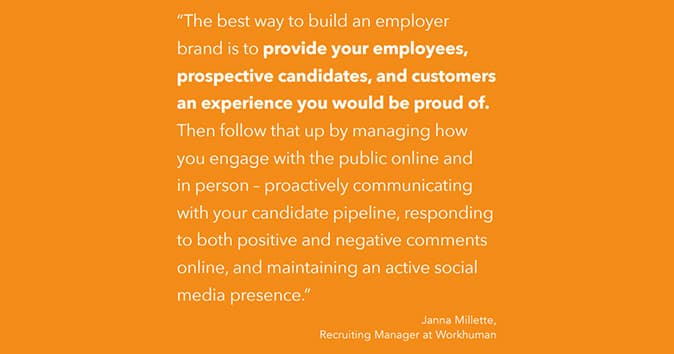
Enhanced employer brand
Did you know that about 75% of job seekers consider the employer’s brand and reputation before applying for a role?
These statistics align with the findings that 72% of hiring managers or HR professionals worldwide agree that employer branding is a significant element in the hiring process. A strong employer brand and reputation puts an organization ahead of its competitors. That’s why companies with strong branding are a preferred choice for high-quality talents.
How do recruitment strategies enhance employer brand and reputation?
Social media campaigns and advertising help channel the company’s culture and value to job seekers. Through online campaigns, companies can highlight their remarkable achievements, awards, projects, and positive work environments.
Similarly, posting employee testimonials and satisfaction through social media platforms is another recruitment method that elevates the organization’s value.
It’s important to note that the values that the organization advertises should also align with its real-life workplace scenario. Companies should foster a positive work environment that considers employees’ development and well-being.
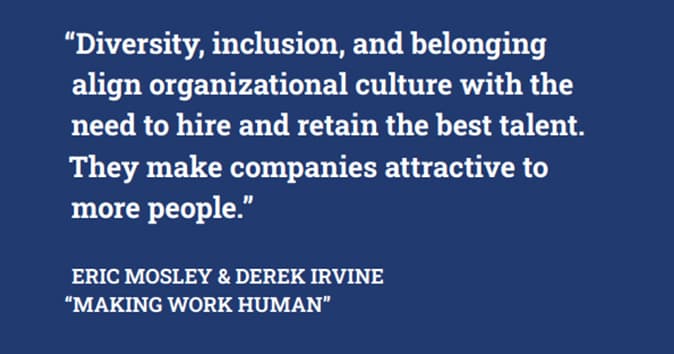
Improving candidate quality and employee retention
Streamlining recruitment processes through effective recruitment strategiesOpens in a new tab allows organizations to filter new hires and end up with the most fitting candidates.
With top talents in your organization, employee retention is also improved -- given that the work environment and culture is a positive and engaging place for employees.
To back this up, significant findings from the Corporate Leadership Council reveal that committed and highly engaged employees are 87% less likely to leave their jobs. They’re also 20% better performing than other employees.
The company will eventually see an influx of high-quality hires by constantly improving and refining recruitment strategies. With qualified and competent talents to fill the roles, positive changes in output and productivity will also manifest.
For more information on employee retention, please read the What is Strategic Human Resource Management (SHRM) and learn how its implementation can empower your company’s workforce.
Reducing cost-per-hire
Using recruitment strategies helps companies cut back on monetary losses that come with poor hiring decisions–in short, reducing the cost-per-hire. Cost-per-hire refers to the costs involved with recruiting new employees, such as advertising costs, referral or bonus program costs, and more. Given that fact, more successful hires equate to a good return on investment on cost-per-hire.
According to SHRM (Society for Human Resource Management), the average cost-per-hire for a new employee can cost around $4,700. Investopedia also reports that companies take six months or more to break even on new hire expenses.
Optimizing recruitment strategies with automation or HR technologies is a prime example that allows organizations to cut back on cost-per-hire. Organizations can significantly reduce costs associated with bad hires by following a streamlined hiring process.
Decreasing time-to-fill
Time is a crucial element in organizations; one of the main objectives of implementing recruitment strategies is to decrease the time it takes from initial contact with a job prospect to job offer acceptance. This timeframe is also known as the time-to-fill.
According to The Josh Bersin Company’s research, the average time it takes to fill an open position is 44 days. Additionally, filling open positions can take up to three months or more, especially for hard-to-fill roles.
Hard-to-fill positions include jobs that are difficult to fill due to a scarcity of applicants. Consequently, there is also a need for more qualified candidates for these roles.
Some recruitment strategy examples and tips helpful in reducing time-to-fill are:
- Using data analytics or the latest HR software
- Assessing recruitment processes and eliminating inefficient methods
- Use bonuses or referral programs to tap into prospective talents from your employees’ network
How to develop a recruitment strategy
Whether you’re a small start-up or a large corporation, crafting recruitment strategies is vital to staying ahead of the competitive job market. In developing a recruitment strategy, organizations should focus on:
Analyze your recruitment metrics and goals
Recruitment metrics refer to the data or measurements that help evaluate hiring successes and failures within the organization. By evaluating your recruitment metrics, you’ll determine fluctuations, trending recruitment tactics, and patterns that may impact the effectiveness of your recruitment strategy. You also get valuable insights about your current recruitment efforts.
Examples of highly referenced recruitment metrics are:
After analyzing your recruitment metrics and noting which aspects need adjustment, you’ll develop objectives or goals you wish to achieve. In crafting feasible goals, consider asking yourself questions like: How soon will you implement these new methods or processes? What is the result that you wish to see? What is your estimated timeframe to achieve the desired results?
You might also like: HR Reporting: Measure Value, Elevate Insights, and Drive Improvements
Leverage recruitment tools
Investing in recruitment tools saves organizations time by simplifying and speeding up the recruitment process. They’re also valuable for tracking application progress, communicating with potential talents, processing applicant information, and onboarding.
The right tools also promote a good hiring experience for applicants. Some commonly used recruitment tools include job boards, chatbots or automated response systems, tracking systems, and other software.
10 successful recruitment strategies to attract top talent
A company’s growth relies heavily on its workforce, and hiring the right individuals is crucial to its success. Check out these successful recruitment strategies to get the most qualified candidates for your organization:
1. Craft compelling job posts
A well-written job description captures potential applicants’ attention, giving them a clear picture of the role and the company’s objectives. A job post also serves as a comprehensive guide that aids job seekers in applying.
A job post should at least contain the following information:
- The job title and description
- Company information, like location and contact details
- Salary information and benefits
- Application steps and deadline
You can advertise job postings through print ads, social media sites (like Facebook and Instagram), and professional network platforms like LinkedIn or Indeed.
What does an excellent job post look like?
Here are some qualities that promising job posts should possess to increase visibility:
A catchy headline or job title
A catchphrase or headline clearly defining the advertised job is essential to capture the jobseeker’s attention. The headline or job title should also be informative but concise to keep potential talents engaged.
Incorporation of relevant keywords
Add the most searched keywords on your job posts for search engine optimization. That way, your job listing will most likely appear when job seekers look up that particular keyword.
Includes images
Did you know that adding photos makes job postings even more appealing? According to Software Advice, 51% of job seekers are more drawn to companies with images or videos in their job posts than those without.
Consider adding photos that showcase your company’s work environment or culture. You can also add images depicting the duties of the role you’re advertising for.
Contains adequate information
The job specification must only highlight the crucial qualities needed for the role, including the perks and benefits of joining your team. Job posts should avoid being a wall of text, as job seekers will most likely overlook those details.
Good layout and design
Use easy-to-read fonts and good color combinations to make information appealing and easily accessible. Note that a clean and organized job post design also reflects your company’s professionalism.
2. Implementing an Applicant Tracking System
3. Utilizing social media for targeted recruitment
More than 50% of job seekers use social media to find jobsOpens in a new tab, and around 73% of job seekers aged 18 to 34 found their previous jobs through social media. Additionally, over 80% of employers use social media to leverage recruitment. Organizations that aren't leveraging social media in recruitment are missing out.
Here are some quick tips to effectively target talents using social media:
- Use paid advertisements and other tools to reach qualified talents
- Engage in groups or communities to increase reach
- Publish videos or visual resources to exhibit company culture and appeal to people’s interest
- Actively engage with applicants
4. Eliminating biases in recruitment
Neglecting or accepting an application because of personal judgment leads to bad hires. Also, making biased hiring decisions may result in decreased diversity, negatively impacting the organization’s performance. In fact, diverse companies see 2.3 times more cash flow per employee compared to less diverse companies, and 60% of job seekers prefer a more diverse workplace.

To limit biases when recruiting, implement the following:
- Brief your interview procedures and stick to a structured or standardized interview process
- Focus on skills assessment
- Blind review applications
- Introduce awareness and diversity training to your organization’s recruitment team
5. Exploring niche job boards
Niche job boards are online platforms focusing on particular industries and professions, allowing employers to reach the most fitting talents for available roles. Posting on niche job boards is a valuable strategy for promoting diversity.
It also attracts strong candidates with the specific skills and experiences your organization is looking for. It’s a prime example of narrowing your search for the most qualified talents. To find a niche job board, search on Google for what category you are hoping to fill.
6. Revisiting past resumes
This strategy allows you to tap into a pool of applicants who have previously shown interest in your company. By reassessing previous applications, you may find valuable talents that may have been overlooked during past recruitments. This technique helps maximize recruitment efforts and save time and resources.
7. Prioritizing college recruiting
Establishing connections with universities and colleges or participating in career fairs grants you access to novel talents. Accessing highly educated people before they reach the job market helps bring fresh perspectives and the latest skills that can be assets to the company.
You can also access potential undergrad talents by offering internship programs, which is beneficial in increasing brand visibility and improving employer and employee brands.
8. Participating in industry events and job fairs
Industry events and job fairs are an excellent avenue for networking and job-seeking opportunities. You can creatively advertise your company; feel free to bring mascots or props, offer snacks, and decorate your booth.
Some important things to consider when participating in job fairs are:
- Company representatives (recruiters, HR team, etc.)
- Event participation costs
- Marketing material and resources (banners, pamphlets, business cards, etc.)
- How to interact with job seekers, the right questions to ask, and the timeframe
- Gathering resumes and contact information from potential talents
9. Engaging with passive candidates
When engaging with passive candidates, it’s vital to highlight growth opportunities, compensation benefits, and work-life balance. Over 70% of job seekers consider work-life balance necessary when looking for job opportunities.
10. Implementing an employee referral program
Almost 90% of employers say an employee referral program is the best recruitment method. This process involves seeking talents or referrals from existing employees’ networks. Most referral programs involve a bonus or rewards scheme where employees can receive incentives after successfully hiring their referrals.

Advantages and disadvantages of recruitment strategies
Refer to this table to compare the summary of benefits and downsides for each recruiting strategy:
| Recruitment Strategy | Advantages | Disadvantages |
| Crafting Compelling Job Posts | Greater talent reach | Attracts unwanted applications |
| Implementing an Applicant Tracking System | Less time-consuming and more organized recruitment, plus, it limits bias | Upfront costs can be expensive and challenging to integrate, especially for companies that use traditional methods |
| Utilizing Social Media for Targeted Recruitment | Reach broader and more diverse talents | Limited access to talents with the required skillset |
| Eliminating biases in recruitment | Increased talent diversity and productivity | Workplace diversity without inclusivity efforts can be detrimental to employees’ well-being |
| Exploring Niche Job Boards | Reach more targeted talents | Some platforms require expensive fees to access advanced features |
| Revisiting Past Resumes | Fewer costs and less time-consuming | Not reliable as the sole recruitment strategy, as organizations might miss out on competent talents |
| Prioritizing College Recruiting | Fresh graduates are more eager to learn and more integrated with the latest software and technologies | Inexperienced hires can be challenging to train and may take time to meet professional expectations |
| Participating in Industry Events and Job Fairs | Offers greater networking opportunities and brand marketing | Time-consuming, highly competitive, and requires extensive efforts or use of resources |
| Engaging with Passive Candidates | Access to high-quality talents | Low success rate |
| Implementing an Employee Referral Program | Fast and cost-efficient hiring method | Prone to biases |
Check out 7 Successful HR Strategy Examples that Work for more recruitment tips.
FAQs
What makes a good candidate?
Qualifications vary per organization, but a good candidate generally showcases a remarkable attitude, especially in teamwork and communication. Experience and technical skills are a huge plus, too. Good candidates should also possess good work ethics and motivation.
How do you evaluate candidates?
Job applicants are often evaluated based on their:
- Educational background
- Skills, qualifications, and accomplishments
- Verification of the references they provide in their resume
- Work experience and training
- Interview responses and salary expectations
How do you interview a candidate?
When interviewing a candidate, the interviewer should make them feel comfortable. Interviewers also ask open-ended questions mainly related to the candidates’ backgrounds and company expectations. Interviewers also break the ice from time to time to ease tension.
Conclusion
With proper implementation, recruitment strategies help improve company operations and increase productivity by getting the most qualified talents to fill available roles.
Effective recruitment strategies also promote the employer brand and reduce costs associated with recruitment. Before utilizing these strategies to elevate recruitment processes, it’s best to analyze your recruitment metrics and determine goals first.

Workhuman Editorial Team
More by Workhuman Editorial TeamRecommended for you