
Employee Service Awards: The Complete Guide to Milestone Recognition Programs
by Ryan Stoltz
Last updated
17 min read

Table of contents
- What are employee service awards?
- How years of service awards support employee retention: the business case
- Modern vs. traditional service awards: what's changed
- Service award ideas by year
- Beyond tenure: other milestones worth recognizing
- How to build an employee service award program: step-by-step
- Budgeting for service awards
- Tax implications of employee service awards
- Celebrating remote and hybrid employees
- Integrating peer recognition with service awards
- How to choose a service awards platform or vendor
- Frequently asked questions
- Wrapping up
Share this article
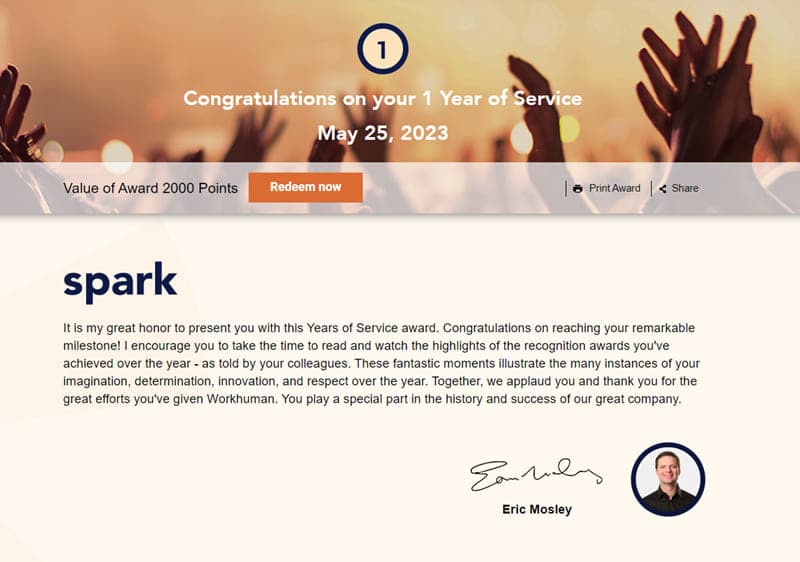
Throughout our lives, we celebrate anniversaries to remind us how far we’ve come and all that we have accomplished. It brings a renewed feeling of excitement and respect for the moment being celebrated.
Because so much of our lives are spent working, this should apply to milestones in our careers, too.
When leaders take the time to commemorate years of service milestones in their employees’ careers, they are showing workers that they are seen as more than just a cog in the machine. They are seen as people who should be recognized and appreciated for their work and contributions.
And that recognition shouldn't come in the form of company swag, trinkets, or trophies. Those kinds of "awards" become, at best, desk clutter. A dedicated program like Service Milestones® takes a more modern approach to all sorts of milestones in the workplace: onboarding, promotions, transfers, and, yes, years of service.
Here, we’ll discuss why years of service awards are a category all their own, how they impact the employee receiving them and their peers, and what you should actually give employees as a reward.
What are employee service awards?
Employee service awards are formal recognition programs that celebrate workers at predetermined tenure milestones, typically at one, three, five, ten, fifteen, twenty, twenty-five, and thirty years of service. Unlike spot bonuses or performance awards that recognize a single achievement, service awards honor something larger: an employee's entire history of contribution, growth, and commitment to the organization.
That distinction matters more than most programs acknowledge. When someone reaches a ten-year milestone, you're not recognizing one good quarter. You're recognizing a decade of decisions, relationships, and institutional knowledge they chose to build with you.
What an effective service award actually includes
Strong programs are built on three core components working together:
- A meaningful gift the employee genuinely wants, whether that's a tangible item, an experiential reward, or a gift-of-choice from a curated catalog
- A symbolic award that connects them to the organization, such as custom jewelry, a personalized keepsake, or an engraved item tied to their milestone
- A recognition moment, public or private, where the employee's contributions are named, acknowledged, and celebrated by someone who matters to them
The gift alone is not the program. The moment is what makes it memorable.
Types of service awards organizations use
Common years of service award formats include tangible gifts and curated merchandise, experiential rewards like travel or dining, gift-of-choice catalogs, symbolic keepsakes, additional paid time off, and charitable donations made in the employee's name. The right format depends on your workforce, your culture, and what the employee actually values.
Formal versus informal service award programs
Informal service recognition is manager-driven and inconsistent. One team celebrates a five-year milestone with a team lunch; another lets it pass unnoticed. Formal programs define the policy, automate milestone tracking, and put HR in charge of consistent delivery across the organization.
That consistency is what separates a program from a gesture. It also connects directly to the three pillars of employee retention: respect, recognition, and reward. Service awards, when done well, operationalize all three at once.
How years of service awards support employee retention: the business case
Tenure recognition isn't a line item to justify. It's one of the highest-leverage retention investments available to HR leaders, and the numbers back that up.
Organizations with formal recognition programs experience 31% lower voluntary turnover than those without them. According to Gallup and Workhuman research, employees whose work milestones are recognized are 30% more likely to say they plan to stay at their organization in five years.
When you factor in that replacing a single employee can cost anywhere from 50% to 200% of their annual salary, the math on recognition becomes difficult to argue against.
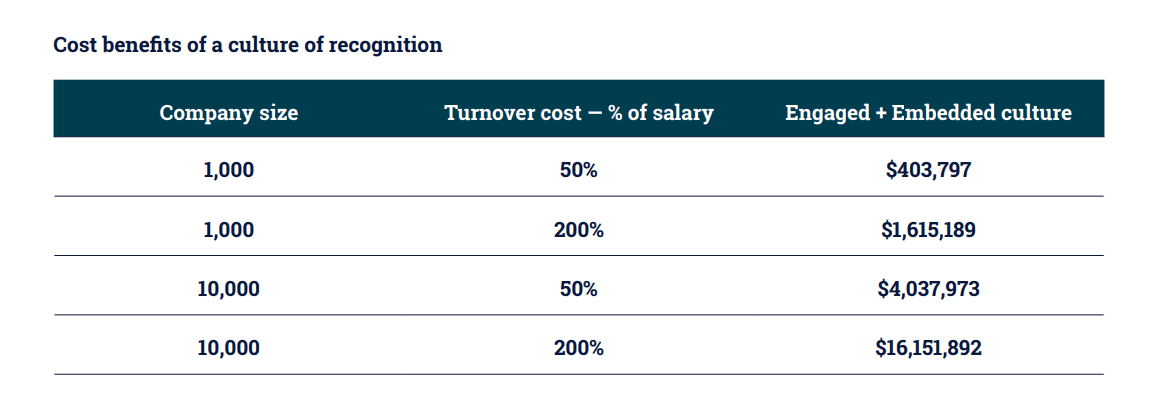
A Gallup and Workhuman study found that creating a culture of recognition can save a 10,000-employee company $16.1 million in turnover costs annually. That's not a soft benefit. That's a measurable return on a program most organizations could implement this quarter.
Why recognition works: the psychological mechanism
When an employee's contributions are acknowledged publicly and meaningfully, it does something the annual performance review rarely accomplishes. It reinforces their identity as someone who belongs here, who matters here. Recognition triggers positive emotional responses, strengthens organizational identity, and creates the kind of intrinsic motivation that keeps people engaged long after the moment has passed.
How service awards map to retention frameworks
Two widely used retention frameworks explain why service awards work structurally, not just emotionally.
The 5C Model of Employee Retention identifies Commitment, Compensation, Career Growth, Culture, and Communication as the primary drivers of whether employees stay. Service awards directly reinforce two of the five: Commitment (by formally honoring the relationship between employee and organization) and Culture (by making loyalty visible and valued across the entire workforce).
The 3 R's framework offers a more tactical lens. Effective service awards deliver all three elements simultaneously: Respect through the ceremony and personal acknowledgment, Recognition through the public visibility of the achievement, and Reward through a tangible expression of organizational gratitude.
The signal to the broader workforce
Service awards don't only affect the employee being recognized. They signal to everyone watching that long-term loyalty is seen, valued, and rewarded here. That signal compounds over time, creating a self-reinforcing retention culture where staying feels as meaningful as achieving.
Modern vs. traditional service awards: what's changed
Most organizations know they should recognize tenure. The gap is in how they do it. The difference between a program employees remember and one they quietly resent often comes down to whether it was designed with the employee in mind or with administrative convenience in mind.
That distinction is what separates traditional service awards from modern ones.
Traditional service awards
The traditional model follows a familiar pattern. HR or a manager selects a gift from a vendor catalog, usually a plaque, a pin, a trophy, or a generic merchandise item. The employee receives it at a team meeting or, in many cases, by mail. No input was asked for. No peers were involved. The moment passes.
Modern service award programs
Modern programs are built around four meaningful shifts.
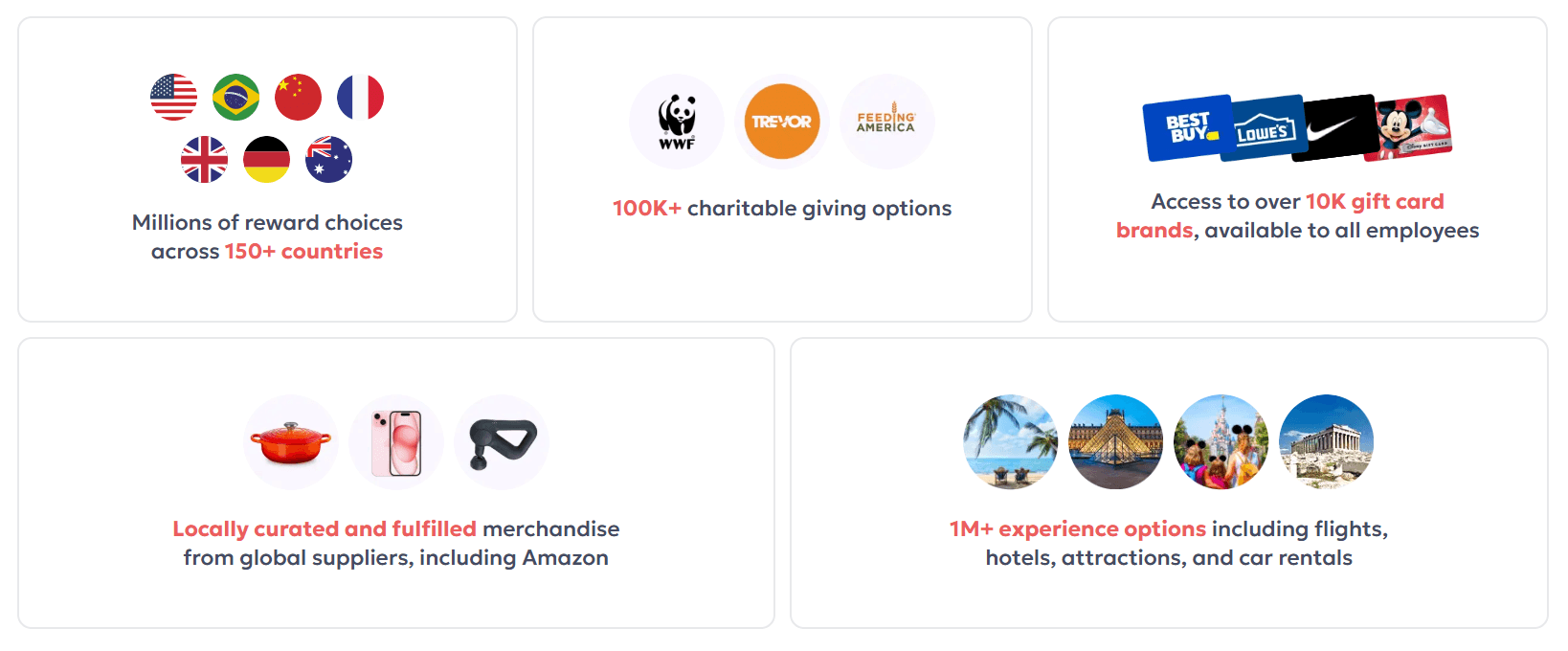
From company-chosen to employee-chosen. Gift-of-choice platforms let employees select something they actually want from a curated catalog. Choice increases perceived value and makes the recognition feel personal rather than procedural.
From private to public. Digital recognition walls, team announcements, and company intranet posts amplify the milestone moment beyond the manager's desk. When the broader workforce sees that loyalty is celebrated here, the retention signal compounds.
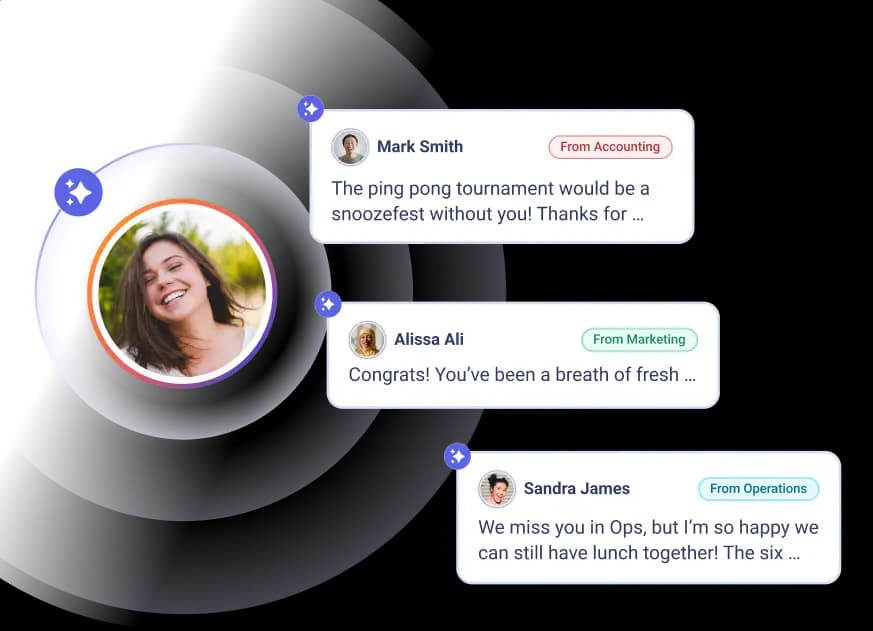
From manual to automated. Integration with HRIS systems means milestone notifications, gift selections, and manager prompts happen automatically. Missed anniversaries become the exception rather than the rule.
From tenure-only to milestone-inclusive. The strongest programs layer promotions, project completions, and performance achievements alongside anniversary dates, creating a recognition rhythm that doesn't wait five years to show up.
One consistent best practice bridges old and new: pair a symbolic keepsake, something personalized and lasting, with an experiential gift choice. The tangible item creates a physical reminder of the milestone. The choice gives it personal meaning. Together, they create the kind of recognition moment employees actually talk about.
Service award ideas by year
Not all milestones carry the same weight, and the most effective programs recognize that. A one-year anniversary calls for something different than a twenty-year celebration, not just in dollar value, but in what the recognition is communicating.
Each phase of an employee's tenure represents a distinct psychological moment, and the awards that resonate are the ones designed with that context in mind.
Here's how to think about recognition at every major milestone.
Early career milestones (1–3 years)
1 year of service: the belonging phase
The first anniversary marks the moment an employee has made their initial commitment and, crucially, had it tested. They've navigated onboarding, built early relationships, and chosen to stay. Recognition here should affirm that decision and signal that the organization noticed.
Gift ideas in the $25–75 range work well at this stage: a personalized anniversary kit, a quality company-branded item, or a gift card to a local experience. The gift doesn't need to be lavish. It needs to be intentional and personal.
3 years of service: the growth phase
By year three, employees are actively investing in their work, building stronger peer relationships, and often taking on more responsibility. Recognition here should reflect that growth trajectory.
Consider professional development credits, an online learning subscription, or an experience voucher in the $75–150 range. Gifts that support who the employee is becoming send a more powerful message than ones that simply mark time.
Mid-career milestones (5–10 years)
5 years of service: the commitment phase
Five years is a genuine psychological threshold. The employee has made a meaningful career investment in your organization, and they likely know it. This milestone deserves recognition that matches that weight.
Gift ideas in the $150–300 range are appropriate here: a weekend getaway voucher, a premium personalized item like an engraved watch or piece of jewelry, or a choice from a curated gift catalog. Offering choice at this stage matters. An employee who has given five years has earned the right to decide what the moment means to them.
10 years of service: the loyalty phase
A decade of contribution is significant by any measure. This milestone warrants broader visibility, not just a quiet desk drop or a manager email. Recognition should be public, personal, and proportionate.
Gift ideas in the $300–600 range include a vacation package or travel credit, high-end electronics, custom engraved jewelry featuring the company name or years of service, or a grant of bonus paid time off. The last option is particularly valued by employees with long tenure who often prioritize time over things.
Senior milestones (15–20 years)
15 years of service: the expertise phase
Fifteen-year employees are often the people others come to when something goes wrong or when institutional knowledge is needed fast. They're team anchors. Recognition here should honor depth, not just duration.
Premium experiences work especially well: fine dining events, concert tickets, or access to a major sporting event. Pair that with a significant personalized keepsake in the $500–800 range and you create a recognition moment that feels as meaningful as the milestone deserves.
20 years of service: the legacy phase
Two decades with one organization is rare, and employees at this milestone often feel the weight of that distinction themselves. The recognition should be public, substantial, and personal in equal measure.
Consider a major travel experience, premium electronics, a luxury personalized item, or a peer-gathered tribute book where colleagues contribute written memories and reflections. Budget guidance of $750–1,200 reflects the genuine rarity of this commitment. A tribute book, incidentally, costs nothing beyond coordination but often becomes the most treasured part of the celebration.
Legacy milestones (25–30+ years)
25 years of service: the silver anniversary
A quarter-century with one company is a monumental career accomplishment. It deserves recognition that's truly prestigious, not just a larger version of what came before. At this milestone, think about gifts that will be used and seen every day: a high-end grill, an outdoor firepit, a premium television, or luxury outdoor equipment.
A significant travel experience or a high-value gift-of-choice from a premium catalog also lands well. Budget guidance of $1,000–2,000 reflects the rarity and significance of this level of loyalty.
This is also the milestone most likely to generate buzz among the broader workforce, which is part of the point. When employees see a 25-year anniversary celebrated with genuine prestige, it sends a signal to every person in their second, fifth, and tenth year about what staying here means.
30 years of service: extraordinary service
Some milestones transcend gift categories entirely. For employees with 30 or more years of service, consider recognition that lasts beyond the moment: a named award in their honor, a company scholarship bearing their name, or a family-inclusive celebration that acknowledges the shared sacrifice behind that kind of tenure.
On the gift side, a major travel experience or a legacy-level choice gift in the $1,500+ range is appropriate. But the most lasting recognition at this milestone is often the story the organization tells publicly about what this person has meant to the team.
A note on budget ranges: the figures here are illustrative guidelines drawn from industry benchmarks. Appropriate investment varies based on organization size, compensation bands, and industry norms. The principle matters more than the precise number: recognition weight should reflect milestone weight.
Beyond tenure: other milestones worth recognizing
Work anniversaries are the most common trigger for service awards, but the strongest recognition programs don't stop there. The moments that shape an employee's career don't arrive on a five-year schedule, and a program that only activates at tenure intervals will miss a significant portion of the contributions worth celebrating.
The good news is that a broader milestone framework isn't complicated to build. It starts with expanding your definition of what counts.
Promotions mark a new chapter in an employee's career trajectory. Recognizing a promotion publicly reinforces that advancement is visible and valued here, not something that quietly happens on a payroll spreadsheet.
Project completions are especially easy to overlook, particularly for long-duration or high-stakes work. When a team finishes a major initiative and the organization moves immediately to the next priority, the people who drove that work experience what recognition practitioners call the invisible contribution problem. A brief, intentional celebration at completion prevents that gap.
Performance achievements deserve recognition distinct from the annual review cycle. Reaching a sales target, earning a professional certification, or hitting a quality benchmark is a concrete accomplishment. Waiting 12 months to acknowledge it through a performance conversation isn't recognition. It's documentation.
Safety milestones are particularly meaningful in manufacturing, construction, and healthcare environments. Recognizing incident-free periods reinforces safety culture in a way that policy reminders never can.
Personal milestones, including education completions and professional certifications, signal that the organization sees the whole person, not just their output.
Peer-nominated recognition ensures that exceptional ground-level contributions don't go unnoticed simply because a manager wasn't in the room to see them.
A practical way to operationalize all of this: build a milestone calendar in your HRIS that surfaces tenure and non-tenure recognition opportunities automatically. No meaningful moment should go uncelebrated because it fell off someone's to-do list.
For a deeper look at how these moments connect to the broader arc of an employee's career, explore Workhuman's guide to career milestone celebrations.
How to build an employee service award program: step-by-step
Understanding why service awards matter is the easy part. Building a program that actually delivers, consistently, across every team and location, is where most organizations struggle. The steps below give you a repeatable framework for designing a program that holds up beyond the launch announcement.
Step 1: Establish a recognition committee
Service award programs fail when they're owned entirely by HR. Build a cross-functional group that includes HR, Finance, senior leadership, and at least one employee representative. This group makes design decisions, builds internal buy-in, and ensures the program reflects what employees actually want, not just what's administratively convenient.
Step 2: Define your objectives
What specific outcomes is this program meant to drive? Retention at critical tenure thresholds, improvements in engagement scores, ENPS gains, or voluntary turnover reduction? Naming those targets upfront determines every structural decision that follows, from which milestones to recognize to how much to invest at each tier.
Step 3: Map your milestone tiers
Decide which anniversary years trigger formal recognition and how much ceremony weight each one carries. This includes both tenure milestones and non-tenure milestones you want to layer into the program. More on this structure below.
Step 4: Set your budget
Industry benchmarks suggest allocating 20 to 50 per employee per year for service recognition. Apply that against your headcount and expected milestone distribution to project annual spend before committing to gift tiers or ceremony formats.
Step 5: Define award types for each tier
Balance tangible gifts, experiential rewards, symbolic keepsakes, and additional paid time off based on milestone weight. Decide whether employees choose from a curated catalog or receive a specific award. Choice consistently increases perceived value and makes the recognition feel personal rather than procedural.
Step 6: Select a technology platform or administrator
Manual tracking is where programs break down. Automating milestone notifications, manager prompts, and gift fulfillment removes the administrative burden and prevents missed anniversaries.
Step 7: Establish the celebration protocol
Who presents the award? At minimum, the direct manager. For ten-year milestones and beyond, a senior leader's presence adds meaningful weight. Define what the ceremony looks like, whether that's a team meeting, an all-hands shoutout, or a one-on-one conversation, and document how the recognition will be shared with the broader workforce.
Step 8: Launch with manager training
The program's success lives or dies in the hands of managers. Provide scripts, talking points, and celebration guides before the program goes live. A manager who understands the why and the how will deliver a recognition moment the employee remembers. One who treats it as a checkbox will undermine every dollar invested.
Step 9: Measure and iterate
Track participation rates, employee satisfaction scores at milestone cohorts, and retention data year over year. Adjust gift catalog options, budget allocations, and ceremony formats based on what the data tells you.
Budgeting for service awards
Budget is where good intentions stall. A clear allocation model prevents that.
The industry benchmark of $20 to $50 per employee per year for service recognition gives you a starting point. From there, distribute that budget unevenly and intentionally. Early milestones at one to three years warrant lower gift investment because the relationship is still forming. Legacy milestones at 20 to 30 years warrant significantly higher investment proportional to the tenure being recognized.
One budget line that's easy to overlook: ceremony costs. Catering for a team celebration, printed tribute materials, or a small event to honor a 25-year milestone are real costs that belong in the program budget, not in an ad hoc departmental expense. Factor them in from the beginning so managers aren't improvising when the moment arrives.
The goal isn't to spend the most. It's to spend intentionally, in a way that signals to every employee exactly how much their commitment is valued here.
Tax implications of employee service awards
Service award programs don't just involve HR and Finance in the design phase. They also involve the IRS. Understanding how the tax treatment works before you build your program determines whether your awards are a tax-advantaged benefit or a taxable wage, and that distinction has real consequences for both your budget and your employees' W-2s.
This section provides general educational guidance. Organizations should consult a qualified tax advisor for program-specific advice.
What qualifies as a tax-advantaged service award?
The IRS draws a clear line between awards that qualify for favorable tax treatment and those that don't. Qualified length-of-service awards must meet all of the following criteria:
- The award must be tangible personal property. This means a physical item, such as a gift from a curated merchandise catalog, a piece of custom jewelry, or an engraved keepsake. It cannot be cash, a gift card, a prepaid debit card, a vacation package, meals, lodging, or event tickets. Those are always taxable as ordinary income, regardless of the amount.
- The award must be presented as part of a meaningful ceremony. It cannot be disguised compensation or a routine bonus delivered in a new wrapper.
- The employee must have completed at least five years of service and must not have received a qualified service award within the prior four years.
This is why tangible gift catalogs, not gift cards, are the right structural choice when tax exclusion matters. A $500 gift card is fully taxable. A $500 physical item awarded through a qualified plan may not be.
IRS exclusion limits at a glance
The IRS sets two thresholds depending on the type of plan you operate:
| Plan type | Annual exclusion limit per employee |
| Non-qualified plan | Up to $400 |
| Qualified written plan (documented, nondiscriminatory) | Up to $1,600 |
Any award value above the applicable threshold is taxable and must be reported as ordinary income on the employee's W-2.
A qualified written plan requires formal documentation and must not discriminate in favor of highly compensated employees. The additional compliance burden is real, but so is the difference between a $400 and $1,600 exclusion cap.
One more category worth knowing: de minimis fringe benefits, such as a branded coffee mug or a low-value promotional item, are generally excludable because accounting for them is impractical. But de minimis is not a blanket exemption. It does not apply to items of meaningful value.
Finally, federal tax treatment is only part of the picture. State tax rules vary and may impose additional requirements or limits. HR teams should review state-specific guidance with qualified tax counsel before finalizing their program structure.
Celebrating remote and hybrid employees
Distance doesn't reduce the significance of a service milestone. But it does make recognition harder to deliver well, and harder to feel real when it arrives.
Here's how to make it work across distance.
Give the milestone its own moment. A ten-year anniversary shouldn't be a footnote in a standing team meeting. For remote employees, that means treating the milestone with the same ceremony weight it would receive in person — a dedicated moment, with the right people present, that signals the organization takes this seriously.
If your organization has a mix of remote and on-site employees, never default to an in-person-only format. Every distributed colleague excluded from the room receives the same message: that their milestone mattered less. Equivalent visibility isn't a courtesy. It's the baseline.
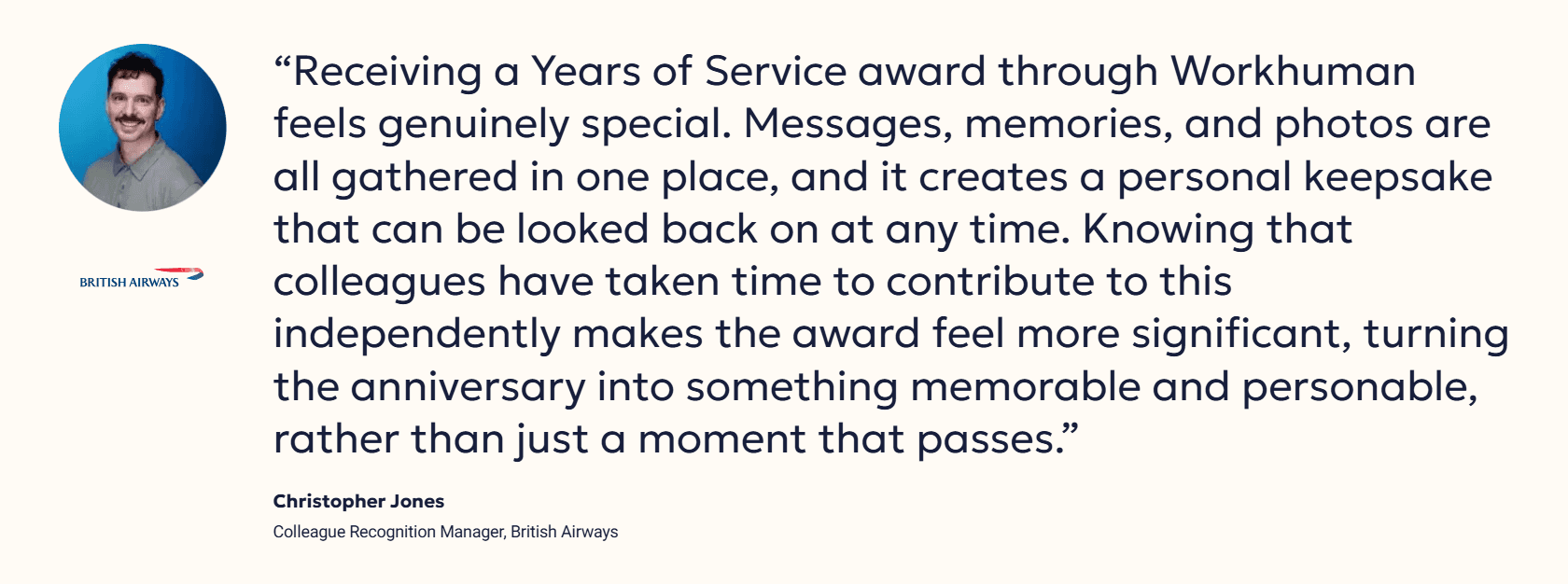
Bring the full work community into the celebration. One of the most meaningful parts of any milestone recognition is hearing from the people who've worked alongside the employee — not just their direct manager. Proactively invite teammates, cross-functional collaborators, and senior leaders to contribute messages ahead of the anniversary. When those contributions are gathered and presented together, they create a permanent record of appreciation that outlasts the moment itself.
Make sure the gift actually arrives. Physical fulfillment matters more for remote employees than any other group, because the tangible award is often the only in-person element of the recognition. Use a platform that ships directly to employee home addresses and confirm international capabilities before finalizing vendor selection. A gift that arrives late or not at all actively undermines the moment it was meant to create.
Amplify the recognition beyond the immediate team. After the milestone is delivered, share it across the channels your organization already uses — Slack, Microsoft Teams, or your company intranet. When the broader workforce sees that a ten or twenty-year anniversary is celebrated visibly and publicly, it sends a signal to every employee at year two or five about what staying here means.
Equip managers to deliver recognition with intention. Remote managers benefit from simple prompts and talking points specific to milestone tiers. A brief guide removes the guesswork and ensures the recognition lands with the same weight it was designed to carry, regardless of whether the manager and employee have ever been in the same room.
Integrating peer recognition with service awards
A manager-led service award delivers institutional weight. Peer recognition delivers something different: the signal that your colleagues, the people who sit beside you (or log on with you) every day, see your contribution and want to say so. The most effective programs combine both, because neither alone is as powerful as the two together.
The mechanics are simpler than most programs assume.
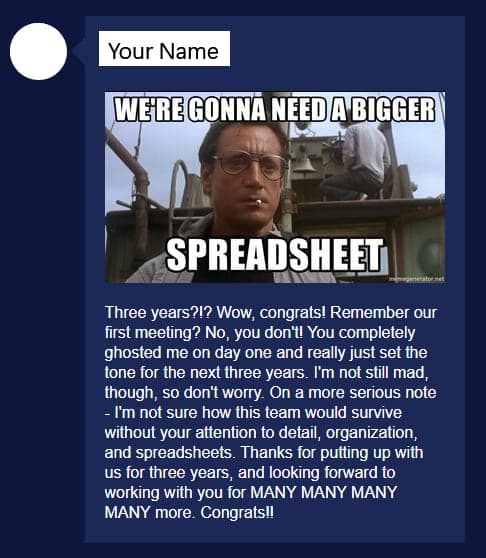
Pre-milestone peer tributes. In the weeks before a service anniversary, invite teammates to submit short recognition messages through your recognition platform or a shared document. Compile them and present the full tribute during the ceremony. For employees who value relationships over rewards, this collection of peer voices is often the most meaningful part of the entire milestone.
Post-milestone social amplification. After the formal recognition moment, open a company-wide channel for peer congratulations. Whether that's a Slack thread, a Teams post, or a dedicated recognition feed, the milestone extends beyond the ceremony and becomes visible to the broader workforce. That visibility is part of what makes the retention signal real.
Peer input on milestone gifts. Some organizations allow peers to nominate colleagues for above-standard milestone awards when the employee has had exceptional cross-team impact. It's a small structural change that meaningfully elevates the peer role in the program.
A permanent record of appreciation. Modern recognition platforms allow peer messages to be attached directly to an employee's milestone record, building an ongoing career archive of appreciation that goes far beyond a single anniversary date.
The manager-plus-peer combination reflects how strong recognition actually works: top-down for institutional endorsement, peer-driven for belonging. One without the other leaves something important on the table.
How to choose a service awards platform or vendor
A service award program is only as consistent as the system behind it. When milestone tracking is manual, anniversaries get missed. And a missed anniversary, especially at five or ten years, does more damage than no program at all. It tells the employee that their loyalty wasn't worth remembering.
The right platform removes that risk. It automates the moments that matter, keeps managers prepared, and ensures every employee receives the same quality of recognition regardless of their location, team, or tenure tier.
Here's what to evaluate before selecting a vendor.
HRIS integration. Your platform should sync directly with your existing HR system, whether that's Workday, SAP SuccessFactors, BambooHR, or ADP, so anniversary dates are tracked automatically without manual data entry. If your team is maintaining a separate spreadsheet, you already have a gap.
Automated milestone notifications. Managers and HR should receive alerts 30 to 60 days before each anniversary. That window is what makes meaningful ceremony planning possible. Without it, recognition becomes reactive and rushed.
Employee-choice gift catalog. Catalog breadth and quality directly determine how much perceived value your awards carry. Evaluate the range of product categories, the quality of available items, and how frequently the catalog is refreshed. A stale or limited catalog signals effort to employees whether you intend it to or not.
Tax compliance support. The platform should flag taxable versus non-taxable awards, align gift fulfillment with IRS length-of-service rules, and provide W-2 reporting support. Tax exposure is a real administrative risk, and a good platform should reduce it.
Global and remote fulfillment. For distributed teams, the platform must be able to ship directly to employee home addresses in every country or region where you have staff. Confirm shipping SLAs and international capabilities before signing.
Reporting and analytics. Program health is measurable. Look for dashboards that surface participation rates, milestone coverage, award redemption data, and employee satisfaction scores. What you can measure, you can improve.
Build vs. buy. Organizations with fewer than 100 employees may manage service awards effectively with a documented policy and manual tracking. At 100 or more employees, the administrative complexity and milestone volume typically justify dedicated platform automation.
Questions to ask any vendor:
- What is your catalog refresh cadence?
- How do you handle tax reporting and W-2 assistance?
- What is your shipping SLA for remote and international employees?
- What HRIS integrations do you support, and what does implementation involve?
- What onboarding and manager training resources do you provide?
Frequently asked questions
What is an employee service award?
An employee service award is a formal recognition given to an employee at a predetermined tenure milestone, typically at one, five, ten, fifteen, twenty-five, or thirty years of service. Unlike performance bonuses tied to a single achievement, service awards honor the full arc of an employee's contribution and commitment to the organization.
Effective programs combine a meaningful gift, a symbolic keepsake, and a recognition moment that names what the employee has actually meant to the team.
What are the 5 C's of employee retention?
The 5 C's of employee retention are Commitment, Compensation, Career Growth, Culture, and Communication. Service award programs directly reinforce two of the five: Commitment, by formally honoring the relationship between employee and organization, and Culture, by making loyalty visible and valued across the workforce.
When recognition is consistent and proportional to tenure, it sends a clear signal to every employee that staying here carries real meaning.
What do companies give for 25 years of service?
For a 25-year milestone, most organizations invest in the $1,000 to $2,000 range and focus on gifts that feel genuinely prestigious: a major travel experience, high-end home goods like a premium grill or outdoor firepit, luxury electronics, or a high-value gift-of-choice from a curated catalog.
A peer-contributed tribute book often becomes the most treasured element, regardless of dollar value. The goal is recognition that matches the rarity of a 25-year commitment.
Do employee service awards reduce turnover?
Yes, organizations with formal employee recognition programs report 31% lower voluntary turnover rates compared to those without structured programs. Strong service award programs specifically have been shown to increase employee retention by two to four years on average.
The mechanism is rooted in the 3 R's of retention — Respect, Recognize, Reward — which service awards directly deliver at each milestone, strengthening organizational commitment over an employee's full tenure.
Wrapping up
Service awards are one of the highest-leverage investments available to HR leaders — not because they're expensive, but because they're specific. They recognize something that spot bonuses and performance reviews rarely address: the full arc of an employee's commitment to an organization.
The research is clear. Employees whose milestones are recognized are more engaged, less likely to be looking for another job, and more likely to say they plan to stay. The moment a service anniversary passes unacknowledged is a missed opportunity to reinforce exactly the kind of loyalty organizations spend significant resources trying to build.
The difference between a program that delivers on that opportunity and one that doesn't comes down to intention. Meaningful gifts employees actually want. Recognition that reaches the full work community, not just the direct manager. Automation that ensures no milestone falls through the cracks. And ceremony that treats the moment with the weight it deserves.
Done well, a service award program doesn't just recognize tenure. It tells every employee watching that staying here means something.

Ryan Stoltz
Ryan is a search marketing manager and content strategist at Workhuman where he writes on the next evolution of the workplace. Outside of the workplace, he's a diehard 49ers fan, comedy junkie, and has trouble avoiding sweets on a nightly basis.
Recommended for you