
11 Proven Strategies to Increase Workplace Productivity in 2026
by Ryan Stoltz
Last updated
11 min read
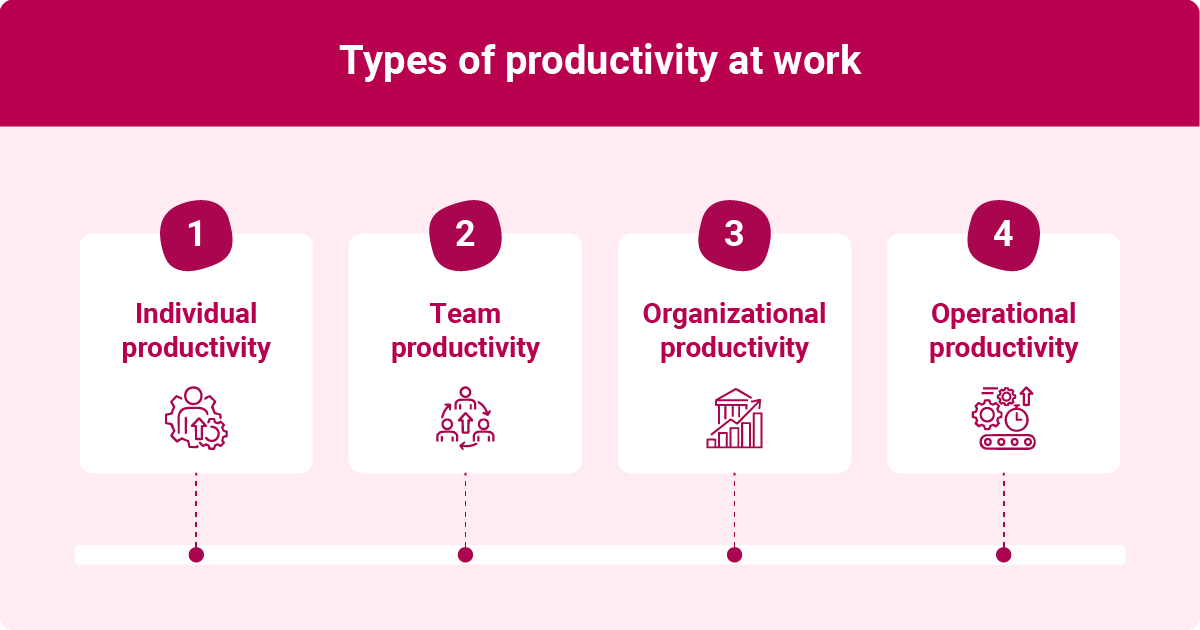
Table of contents
- What workplace productivity actually means (and why traditional metrics fall short)
- Why workplace productivity matters
- What factors affect your team's productivity?
- 11 proven strategies to increase workplace productivity
- How does technology boost employee productivity in the workplace?
- Measuring productivity: KPIs that actually matter
- Alternative work schedules and productivity: what the data shows
- Example productivity initiatives: case study patterns
- Common reasons behind low employee productivity
- Conclusion and implications
- FAQs
Share this article
A productive workforce enhances your bottom line, improves employee job satisfaction, and supports your organization's scalability as it evolves. However, there isn't a one-size-fits-all approach to increasing workplace productivity. Instead, it’s crucial to understand the unique factors and variables that influence employee engagement and experiences.
Learn how to improve employee productivity in the workplace with the right insights, skills, and strategies.
What workplace productivity actually means (and why traditional metrics fall short)
This is where traditional metrics fall short. Hours logged, emails sent, and meetings attended often capture activity, not impact. They also ignore context: productivity looks different for a call center team with repeatable workflows than it does for a product team doing creative, ambiguous work. If you want strategies for improving efficiency at work, you first need a shared definition of what “productive” means in your environment and for your roles.
The three dimensions of modern productivity
Modern productivity has three dimensions:
- Output: meaningful deliverables and goal completion (with quality built in)
- Efficiency: how well time, tools, and processes convert effort into results
- Sustainability: engagement, wellbeing, and retention that keep performance strong over time
Chasing quantity at the expense of quality and sustainability tends to backfire through errors, rework, and burnout.
Efficiency vs. effectiveness: doing things right vs. doing the right things
Efficiency is doing things right: minimizing time, effort, and cost for a task or process. Effectiveness is doing the right things: choosing work that advances business priorities and customer outcomes.
A team can be extremely efficient at low-value work. Sustainable productivity requires both. This lens helps you spot busywork and redesign it, rather than simply asking people to move faster.
Authoritative definitions and productivity frameworks
A classic definition frames productivity as the ratio of outputs to inputs over time, often measured as output per hour worked. For knowledge work, the “output” side must include quality and impact, not just volume.
Two simple frameworks can help teams align:
- The 5 C’s: clarity, capacity, competence, commitment, and coordination
- The 3-3-3 rule: 3 hours of deep work, 3 urgent tasks, and 3 maintenance activities (a practical daily planning heuristic)
What are the different types of productivity at work?
Before you can learn how to improve productivity in the workplace, you must understand the various ways productivity emerges across different roles, teams, and contexts. The primary types of workplace productivity include:
- Individual productivity: This aspect of productivity measures how efficiently each individual completes tasks, meets deadlines, and contributes to overall work goals.
- Team productivity: These metrics gauge how effectively employees communicate and collaborate to achieve common objectives, focusing on both interdepartmental and cross-functional teamwork.
- Organizational productivity: This level of productivity compares your organization's inputs, such as labor, time, and finances, to all of its tangible outputs, such as sales and branding goals.
- Operational productivity: This level focuses on the efficiency of daily business operations. Operational productivity strategies focus on streamlining processes, reducing waste, and improving workflows to make routines more efficient.
You can have highly productive individuals who still struggle if priorities are unclear, handoffs are messy, or tools create friction. Systems either amplify effort or waste it.
The five main factors that determine workplace productivity
Most productivity issues trace back to five drivers:
- Capability: skills, training, and role fit
- Work environment: physical, cultural, and digital conditions that shape focus
- Leadership quality: clarity, support, and decision-making
- Motivation and engagement: purpose, autonomy, and recognition
- Process and systems design: workflows, communication norms, and resource allocation
These factors interact. A weak environment or unclear priorities can drag down performance, even with strong talent. And while long hours can look productive on paper, research links extended overwork with worse health outcomes, which is a warning sign for any productivity approach that cannot be sustained.
Why workplace productivity matters
Enhancing productivity at the workplace supports various aspects of your organization, from profitability to morale. Many of the best strategies for a productive workplace can also easily align with your broader business growth goals, such as reducing turnover, expanding scalability, and adopting new, future-forward solutions.
Explore the top advantages of workplace productivity.
Productive employees influence growth and profitability
Improving workplace productivity supports your organization's profitability, growth, and scalability in many practical ways. For example, using tools powered by artificial intelligence (AI) can help you reduce the time required for specific tasks.
This support can then increase the number of tasks employees take on and give them more time to refine details, check for errors, and improve the quality of outcomes.
Productivity fosters long-term sustainability
Your business's sustainability comprises various factors, including long-term profitability, environmental impacts, and employee treatment. Long-term sustainability is crucial to your organization's growth and lifecycle, enabling you to adapt to market changes, financial hardships, and other setbacks.
The efforts you make to support productivity levels and reduce costs can also raise employees' job satisfaction. This can then increase employee retention, profitability, and resource efficiency to maximize your sustainability.
Additionally, reducing waste can further support your bottom line and minimize your environmental impacts.
Productivity boosts employee morale
Employee productivity and morale often go hand in hand. Employees with higher engagement, motivation, and job satisfaction may work faster and give their tasks more focus. This stresses the importance of boosting morale with recognition, rewards, and a positive company culture.
Likewise, increasing productivity and engagement can support employee morale and their sense of purpose, depending on how you approach it. While overworked employees can quickly lose their morale, giving employees more autonomy over their workflows lets them operate at a pace that suits them without risking morale.
Productivity leads to a goal-oriented work environment
Additionally, clear communication and shared objectives keep teams aligned to avoid duplicated efforts or errors that affect the whole team.
What factors affect your team's productivity?
Diagnosing workplace productivity requires you to consider all variables impacting employees' experiences, from internal team dynamics to external market shifts. Factors that affect team productivity include:
- Internal factors: These factors can significantly impact morale, engagement, and employee experiences. Examples of internal factors include organizational culture, team dynamics, management styles, engagement, internal tools, and communication practices.
- External factors: These factors are often outside of your control and generally demand adaptability, flexibility, and a proactive mindset. Examples of external factors include market conditions, economic instability, third-party tools, or global events.
- Personal factors: These individual factors can vary from employee to employee, stressing the need to understand each person's unique needs and maintain regular open dialogue. Examples of personal factors that impact workplace productivity include attitudes, personal life events, health issues, work-life balance, friendships with colleagues, and overall well-being.
11 proven strategies to increase workplace productivity
Follow these tried and proven strategies to increase productivity in your workplace.
1. Set clear goals
Establishing clear expectations and objectives supports productivity by limiting confusion and aligning teams on shared goals. Consider using a SMART framework, setting goals that are:
- Specific
- Measurable
- Achievable
- Relevant
- Time-bound
As you share examples of SMART goals for work performance, leave opportunities for employees to ask questions or seek clarification. This open dialogue can further minimize confusion and make employees feel valued and more comfortable asking questions later.
2. Encourage regular feedback
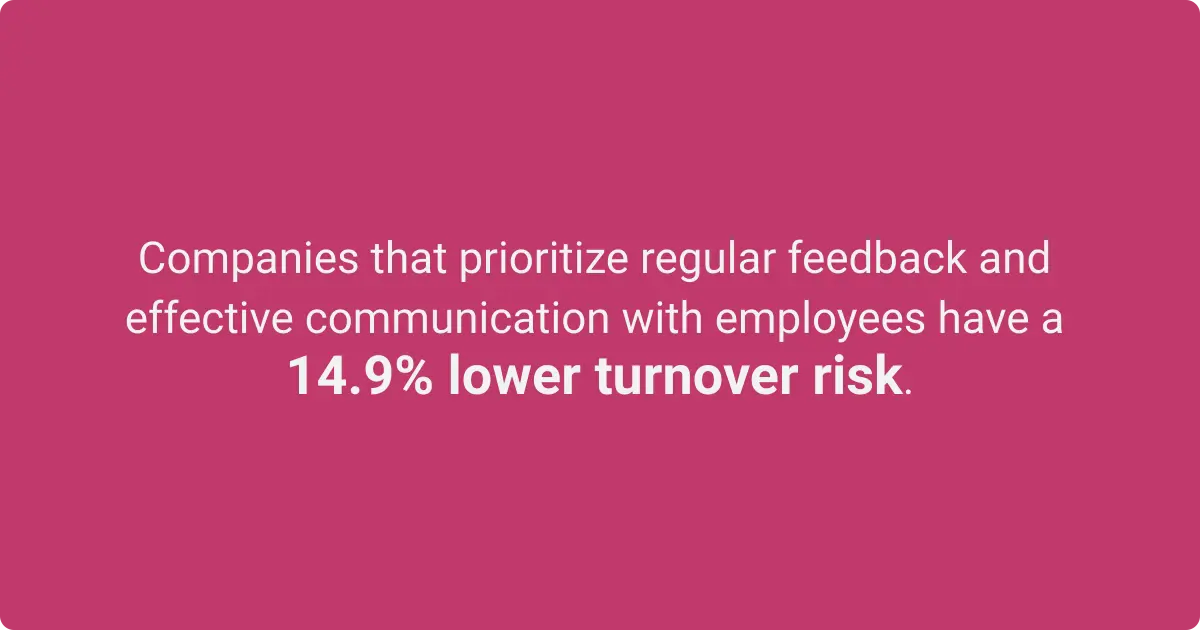
Ongoing feedback from business leaders and peers can make employees feel seen and appreciated, boosting motivation and engagement. While periodic feedback is useful, it's often base-level and doesn't give you enough time to focus on daily operations or employee-specific needs.
More frequent recognition and feedback opportunities can further support productivity by letting you be more specific and guide employees as they grow.
Of course, how you deliver feedback can make all the difference. Strategies for sharing employee feedback include:
- Establishing trust
- Creating kind, positive dialogue
- Being specific about feedback, citing actions, behaviors, and data
- Using "I" statements rather than "you" statements
- Actively listening to their reactions and thoughts
- Integrating storytelling to drive emotional connection
- Limiting feedback sessions to specific topics
3. Improve working conditions
Ineffective workflows, social isolation, limited access to resources, and other workplace conditions can negatively affect employees' well-being. As reported by the Occupational Safety and Health Administration (OSHA), enacting strategies to reduce workplace stress can raise productivity, focus, morale, safety, and employee health.
Improving work conditions requires you to consider various aspects of your organization, from your company culture to the digital employee experience (DEX).
4. Limit unproductive meetings
Meetings that are too frequent, too long, or simply unproductive can limit productivity by decreasing available work hours, slashing motivation, and contributing to miscommunication.
In the research article "Too Many Meetings? Scheduling Rules for Team Coordination,Opens in a new tab" Management Science found that organizations should re-strategize their meeting schedules based on their needs, projects, team size, and the level of information being shared.
Strategies for making meetings more productive include:
5. Stop micromanaging
Many employees work best when they can set their own pace and workflow, underscoring the need to give them greater trust and control over their responsibilities. Based on research in Proceedings, employee autonomy is especially crucial for employee productivity in remote, hybrid, and distributed workplaces that rely on telecommunication.
Leading teams without micromanaging is a complex balancing act, especially when operating with new technology and ever-evolving practices. Social recognition tools, such as Workhuman®, let you provide consistent feedback without making employees feel micromanaged or unappreciated.
6. Provide regular training
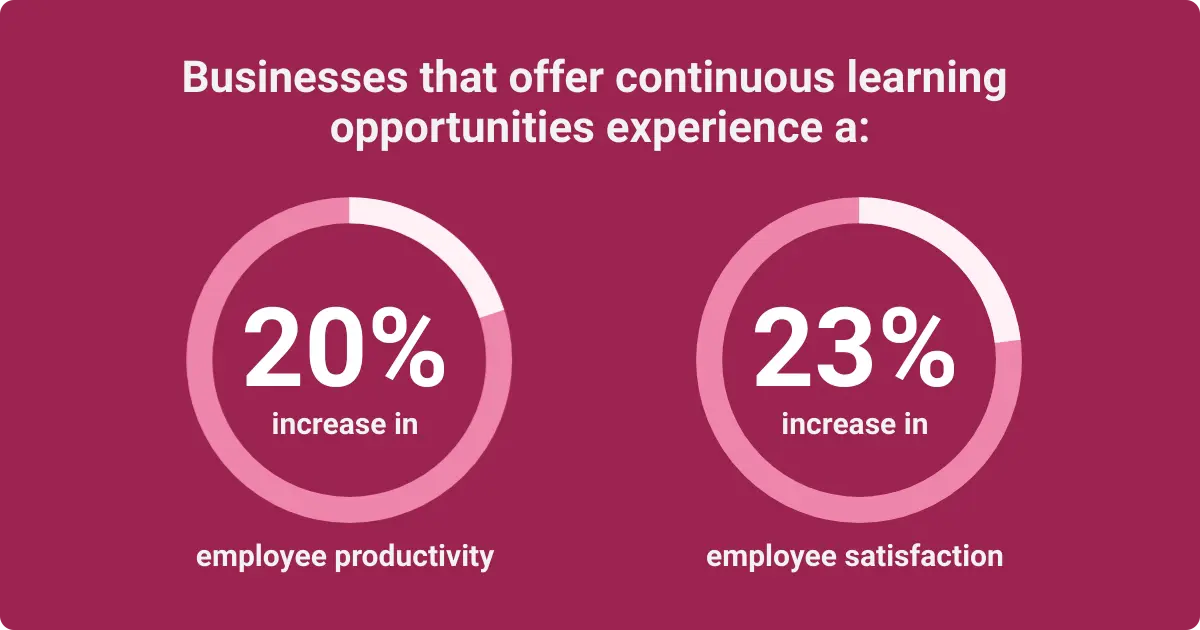
Training and development can effectively improve productivity in the workplace and allow organizations to distinguish themselves from competitors. Tracking workplace productivity and employee experiences helps you identify your team's most significant skill gaps and areas for improvement.
Use these actionable insights to effectively upskill your team, boost engagement, and expand your organization's capabilities. Occasional, infrequent training isn't enough, though. Invest in continuous training with a regular schedule to help employees expand and relearn their skills and practices as industry standards evolve.
7. Recognize employee successes
Workhuman and Gallup research revealed that effectively recognizing employees' contributions supports productivity and safety while limiting absenteeism. In fact, simply making half of your employees feel recognized for their work could boost overall productivity by 9%.
Effective recognition goes far beyond saying "good job." Your feedback should be specific, actionable, personalized, goal-oriented, and data-driven. Tools like Workhuman can maximize your insight into employees' individual productivity and recommend the most appropriate recognition strategies for each unique individual.
8. Avoid multitasking
Hefty workplace demands may seemingly make multitasking inevitable. However, limiting multitasking and encouraging teams to tackle one task at a time can boost productivity, reduce stress, and minimize errors.
Multitasking can negatively impact employee well-being and productivity, especially due to job stress. Trying to focus on multiple new or knowledge-based projects at once can lead to fatigue, errors, and a weaker sense of purpose and connection.
9. Encourage employees to take breaks
Stepping away from work for even a few minutes can boost employees' productivity, engagement, job satisfaction, and mental health. It can also elevate employees' focus when they return to their tasks, offering a fresh perspective and renewed motivation.
Make sure that employees' breaks are actually detached from their work. This means no one should be completing any paperwork or administrative tasks during their lunch. Regular breaks are essential for maintaining focus and well-being. Also, implementing flexible working schedules can enhance productivity and foster a more positive work culture.
10. Communicate effectively
Communication skills help you establish clear expectations and deliver effective feedback to continuously support workplace productivity. Beyond that, maintaining an environment of healthy and open communication can make employees feel more comfortable asking questions or reaching out for support.
Consider investing in communication skills training, integrated messaging platforms, and feedback tools, such as Workhuman, to further improve workplace communication.
11. Address unrealistic workloads and deadlines
A clear picture of goals and tasks can help new employees get settled quickly and perform their roles with confidence.
Easing teams' deadlines, workloads, and expectations can reduce the risk of burnout and help you maintain high productivity in the long term. That said, there's no one-size-fits-all solution. Take time to talk to your teams and employees to understand their unique needs and stressors.
Hiring the right people and providing them with the right tools is also crucial for attracting top talent and promoting a better work culture.
How does technology boost employee productivity in the workplace?
Leveraging productivity apps can streamline workflows by providing employees with support, data-driven insights, and streamlined collaboration channels.
Examples of workplace productivity tools include:
- Project management tools: Software such as Trello, Asana, and Monday.com streamline workflows by tracking team tasks and keeping everyone on the same virtual to-do list.
- Communication tools: Slack, Microsoft Teams, and other platforms facilitate better interactions, reduce misunderstandings, and establish accessible paper trails of conversations.
- Automation tools: Automation platforms such as Zapier, IFTTT, and industry-specific tools can streamline repetitive tasks, saving teams time and mental effort.
Measuring productivity: KPIs that actually matter
The best productivity measurement looks less like a single scoreboard and more like a balanced dashboard. Pair lagging indicators (what results you got) with leading indicators (the conditions and behaviors that predict results) so you can intervene early.
Just as important: mix quantitative signals with qualitative feedback, because even common productivity measures (especially self-reports) can vary in validity and reliability. And be explicit about purpose—when a metric becomes a target, people can game it, creating unintended consequences.
Output-based metrics
- Deliverables shipped against goals (OKRs), adjusted for complexity
- Quality signals: defect rates, revision cycles, customer satisfaction
Efficiency and process metrics
- Cycle time and time to value (how quickly work creates impact)
- Meeting health: time spent vs. decisions made and actions completed
Capacity and utilization metrics
- Planned vs. unplanned work (how often “urgent” work disrupts commitments)
- Work in progress (WIP) and bottlenecks (where work consistently stalls)
Wellbeing and sustainability metrics
- Overtime patterns and workload pulse checks (early burnout signals)
- Retention, absenteeism, and exit themes tied to workload
Building a balanced productivity dashboard
Use a small set of metrics from each category, review trends (not one-off snapshots), and ladder individual measures to team and business outcomes.
For deeper “why,” AI-powered analytics can help surface patterns in collaboration and engagement. For example, Workhuman iQ’s AI Assistant analyzes peer-to-peer recognition data to deliver on-demand insights and personalized manager recommendations.
Alternative work schedules and productivity: what the data shows
Four-day work week models and evidence
Not all “four-day weeks” are the same. Some reduce hours (often ~32 hours with full pay), while others compress 40 hours into four longer days.
Large pilots have reportedOpens in a new tab that productivity and service levels can hold steady (or improve) alongside better wellbeing—often because teams cut low-value work and redesign how work gets done.
At the same time, a recent systematic review notes results vary by role and sector, and study quality is uneven—coverage needs and coordination can be real constraints for client-facing and operational teams.
Flexible scheduling and core hours approaches
Flextime, core-hours overlap, and results-only approaches can support chronotype fit and reduce commute friction.
A 2010–2024 review found flexible work arrangements were positively associatedOpens in a new tab with employee performance, with a moderate overall effect size. Evidence from large hybrid experimentsOpens in a new tab also suggests productivity may stay stable while retention improves.
Designing and running schedule experiments
Treat schedule changes like pilots: set baselines, define success metrics (output, quality, cycle time, wellbeing), and plan for edge cases (coverage, meetings, cross-team dependencies).
The UK four-day week trial emphasized preparation, tailored designs (not one-size-fits-all), and multi-point measurement—details that often separate durable wins from short-lived enthusiasm.
Example productivity initiatives: case study patterns
Note: The examples below are fictitious composite scenarios based on common patterns HR teams report. They’re meant to illustrate implementation realities—not describe specific companies.
Case pattern 1: Meeting culture transformation
Problem: Meetings consume 40–60% of the week, slowing decisions.
Intervention: No-meeting focus windows, 25/50-minute defaults, agenda requirements, quarterly audits.
Typical results: Noticeable drop in meeting hours, faster decision cycles, more focus time.
Timeline: 3–6 months for behavior change; 12+ months for culture stickiness.
What makes it work: Executive modeling, transparent reporting, team-level flexibility.
Case pattern 2: Focus time protection programs
Problem: Fragmented attention and constant context switching.
Intervention: Protected focus blocks, clear response-time norms, “interruption budgets.”
Typical results: Higher completion rates for complex work, less overtime.
Timeline: 4–8 weeks to stabilize; 6+ months for cross-team coordination.
What makes it work: Manager buy-in, calendar integration, peer accountability.
Case pattern 3: Tool stack rationalization
Problem: Too many tools create duplication and friction.
Intervention: Audit, consolidate to core platforms, integrate, train, sunset legacy tools.
Typical results: Time saved, cleaner data, fewer “where is this?” delays.
Timeline: 3–4 months migration; 6–12 months adoption.
What makes it work: User involvement, phased rollout, clear governance.
Case pattern 4: Energy and wellbeing-based redesign
Problem: Unsustainable pace driving burnout and turnover.
Intervention: Capacity planning, workload visibility, recovery time, flexible scheduling.
Typical results: Lower burnout signals, improved retention with steadier output.
Timeline: 6–12 months; ongoing.
What makes it work: Psychological safety, leader vulnerability, metric transparency.
Common reasons behind low employee productivity
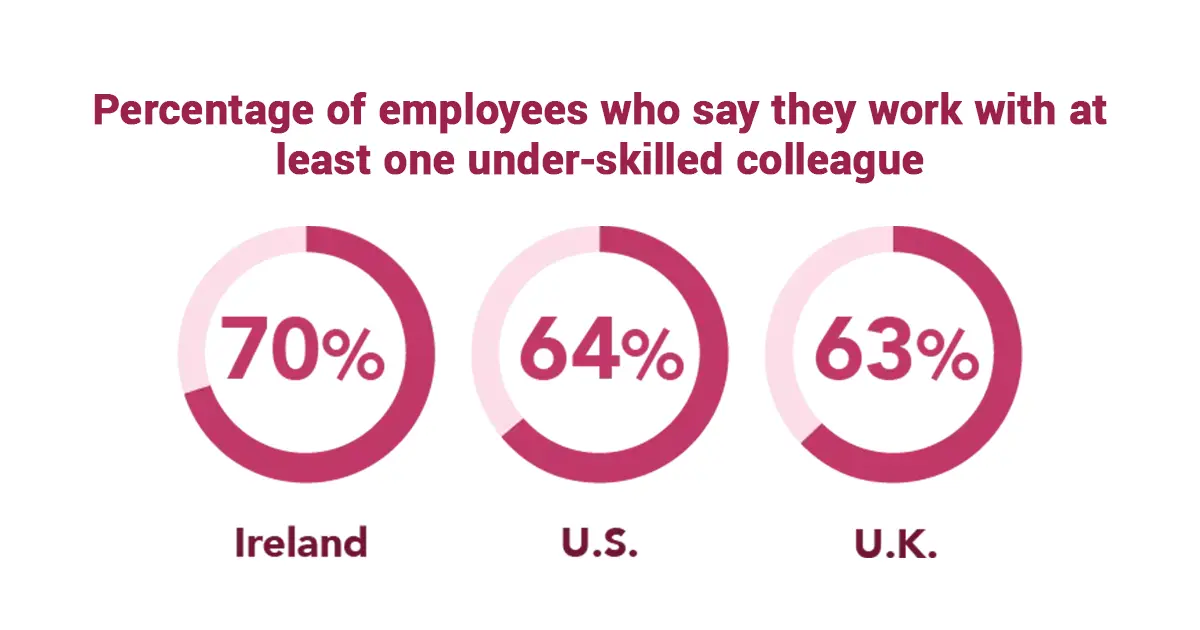
Various factors can positively or negatively impact workplace productivity, so you need to have a holistic understanding of your employees' experiences to provide effective support. Addressing employees' needs with upskilling opportunities and other resources is especially crucial in this rapidly evolving age of AI.
Common reasons for low employee productivity include:
- Lack of clear direction or team goal setting
- Ineffective leadership
- Poor communication
- Demanding workloads and deadlines
- Burnout and stress
- Poor work-life balance
- Skill gaps and lack of training
Conclusion and implications
Workplace productivity is complex. With the various internal and external factors influencing it, properly addressing productivity concerns requires several targeted strategies.
As workplaces become more digital, embracing human-AI collaboration can maximize your insight into employees' experiences to effectively improve workplace productivity. The right practices and tools, such as Workhuman, help you continuously support your team as their skills, goals, and needs evolve.
FAQs
What’s the difference between productivity and efficiency?
Productivity is about creating valuable outcomes (the right results, with the right quality) using the time and resources you have—and doing it in a way people can sustain.
Efficiency is narrower: doing a task with minimal wasted time, effort, or cost. You can be efficient at the wrong work, which is why the best productivity conversations also include effectiveness (doing the right things).
How much can workplace productivity realistically improve?
It depends on what’s driving the drag. Across workplaces, research suggests many “single lever” interventions produce small-to-moderate gains, and some show no measurable impact—often because implementation is uneven or the real bottleneck is somewhere else.
The biggest, fastest improvements usually come from removing obvious friction (meeting overload, unclear priorities, tool sprawl), then reinforcing sustainable habits.
Should managers track individual employee productivity metrics?
Use caution. Individual metrics can be helpful only when outputs are clear, the intent is developmental (not punitive), and employees understand how data will be used.
Otherwise, metrics invite gaming (Goodhart’s law) and can erode trust.
Also, intrusive monitoring is linked to lower job satisfaction and higher stress in meta-analytic research—signals that can undermine sustainable performance.
In most knowledge-work settings, team and system metrics are more reliable than “tracking individuals harder.”
What are the most common mistakes in productivity initiatives?
- Measuring activity instead of impact (and accidentally rewarding busywork)
- Rolling out one tactic as a cure-all (without fixing underlying workflow, capacity, or role clarity)
- Skipping baseline metrics, so you can’t prove what changed
- Lack of leadership modeling, so adoption fades after the kickoff
- Ignoring sustainability, then paying the price in burnout, turnover, and rework
How long does it take to see results from productivity improvements?
You can often see early signals in 2–6 weeks (reduced meeting load, clearer prioritization, better focus time). More meaningful shifts—like improved cross-team coordination, steadier throughput, and culture change—typically take 3–6+ months because they require new norms, not just new rules.

Ryan Stoltz
Ryan is a search marketing manager and content strategist at Workhuman where he writes on the next evolution of the workplace. Outside of the workplace, he's a diehard 49ers fan, comedy junkie, and has trouble avoiding sweets on a nightly basis.
Recommended for you